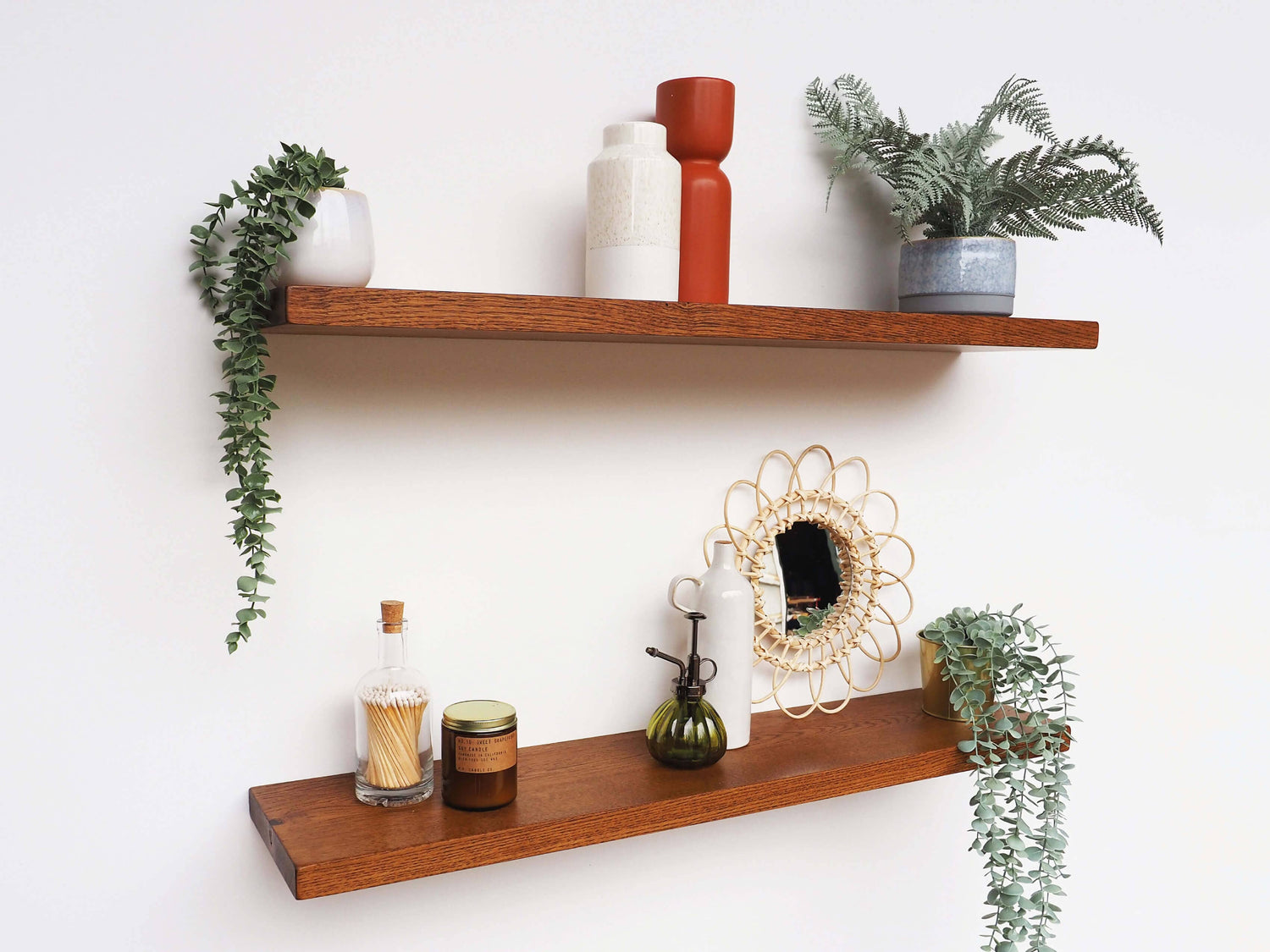

Putting Oak Bracket Shelves to Work: Storage You Don't Need to Hide
Good storage doesn't always need a cupboard door. Sometimes the things you use every day are better kept within easy reach, while books, ceramics and favourite pieces deserve somewhere they can actually be seen.
That's where oak bracket shelves work particularly well. Solid oak gives the shelving enough character to become part of the room, while visible brackets provide a practical, substantial support. Instead of simply filling an empty wall, you can create storage that looks considered and earns the space it takes up.
The trick is to start with what you need to store. Once you know that, decisions around shelf depth, position and how many shelves you need become much easier.
Shelf Storage: What Needs a Home?

Take a look at the room before deciding where your shelves should go. What could genuinely benefit from moving onto the wall?
Everyday essentials → Mugs, bowls, cookbooks, glassware and ingredients you regularly reach for.
Things worth seeing → Photographs, ceramics, artwork, plants and collections that shouldn't be hidden away.
Cluttered surfaces → Books, paperwork and smaller items currently competing for space on worktops, desks and furniture.
Unused wall space → Empty alcoves, walls above furniture and areas where adding a cupboard would feel too bulky.
Oak shelves with brackets can tackle all four, but the way you configure them will depend on the job they're being asked to do.
Open Up Your Kitchen Storage

Kitchens are one of the most natural places for open shelving because so many of the things we store are also things we use every day.
A run of oak bracket shelves can break up fitted cabinetry while keeping useful items close to hand.
Good for:
- Everyday mugs and glasses.
- Plates and bowls.
- Cookbooks.
- Storage jars.
- Tea and coffee supplies.
- Herbs and smaller plants.
Think about: How far items need to project from the wall. A 22cm-deep shelf provides useful space for larger crockery and cookbooks, while a shallower option may be enough for glasses, jars and smaller kitchen essentials.
Position matters too. Things you reach for several times a day should be easy to access, while less frequently used pieces can sit higher up.
There's also no need to turn every available wall into storage. One or two well-positioned solid oak shelves can provide useful additional space while introducing natural timber alongside painted cabinetry, stone worktops and metal hardware.
Give an Alcove a Job

Alcoves have a habit of becoming awkward gaps beside a chimney breast or pieces of furniture. Bracket shelving can turn that empty vertical space into something genuinely useful without the commitment or bulk of fitted cabinetry, and the same alcove can serve very different purposes.
The Library Alcove
Run several shelves vertically to create space for books, then break them up with photographs, ceramics or smaller objects.
Rather than making every shelf spacing identical, think about the height of what you actually own. Larger books and artwork may need more room than paperbacks and smaller decorative pieces.
The Fireplace Alcove
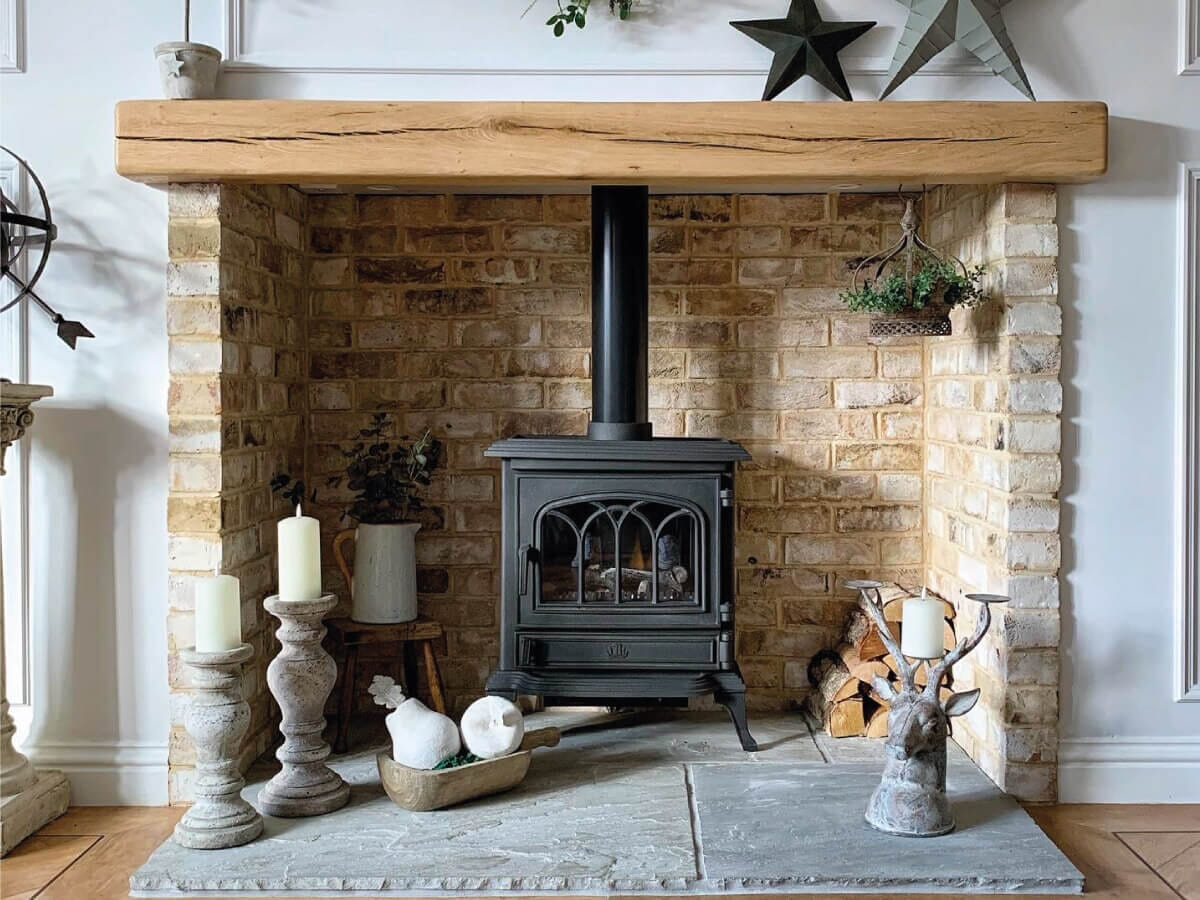
Oak bracket shelves work naturally either side of a chimney breast, particularly where an oak fireplace surround or other timber feature already forms the focal point.
You can use the shelves for a mixture of books, photographs, plants and useful living-room storage without asking the fireplace itself to carry all of the decoration.
The Home Bar
An alcove doesn't have to become a bookcase. A couple of deeper shelves can create dedicated space for glassware and bar accessories, turning an otherwise unused corner into a feature that works particularly well in dining rooms and open-plan entertaining spaces.
Clear the Desk

Home offices rarely suffer from a lack of things. The problem is finding somewhere sensible to put them.
The problem: Books, notebooks, paperwork, stationery and equipment gradually take over the working surface.
The fix: Use the wall above or alongside the desk for the things that don't need to be directly in front of you.
Move onto the shelves: Reference books, storage boxes, notebooks, plants and less frequently used equipment.
Keep on the desk: The things you actually need to work.
It's a simple change, but freeing up the working surface can make even a relatively small home office feel more organised. Where oak already features in the desk or other oak furniture, bracket shelving can also help connect the workspace without everything needing to be part of a matching furniture set.
Store + Display

Open shelving usually looks most natural when practical storage is mixed with things that are there simply because you like them. Rather than separating the two, try pairing them.
Books + ceramics
The books provide useful storage while pottery introduces different shapes, heights and textures.
Cookbooks + everyday crockery
Everything remains within reach, but the combination feels more relaxed than shelves filled with identical storage containers.
Storage baskets + plants
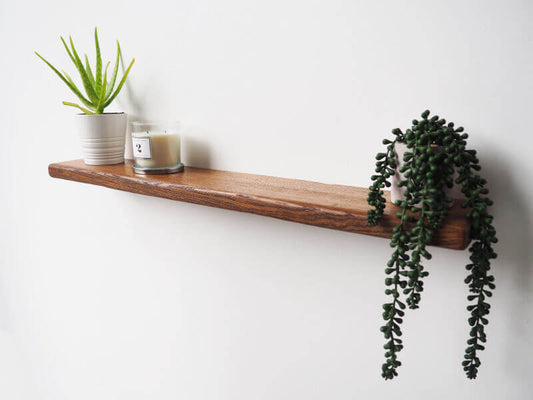
Baskets give smaller clutter somewhere to disappear while greenery softens the harder lines of the shelf and brackets.
Records + artwork
A good option for living rooms or music spaces, combining a collection you actually use with pieces that make the shelves more personal.
Photographs + favourite objects
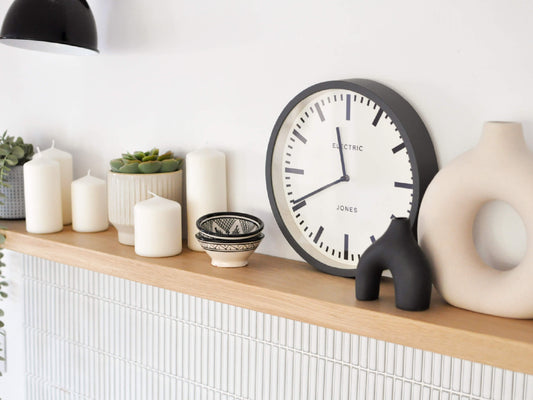
Ideal when the shelf is primarily decorative. Leave enough room around individual pieces so the solid oak remains visible rather than disappearing underneath the display.
There's no need to achieve perfect symmetry. Oak bracket shelves tend to suit a more relaxed arrangement, particularly when you're mixing everyday objects with pieces collected over time.
Small Spaces, Useful Shelves
Not every oak bracket shelf needs to become a major feature. In smaller rooms, a single well-positioned shelf can provide useful storage without taking up valuable floor space.
|
Space |
What a Bracket Shelf Could Do |
|
Hallway |
Create a home for keys, post and small storage baskets. |
|
Utility Room |
Keep regularly used laundry and cleaning products within reach. |
|
Boot Room |
Store hats, gloves, dog-walking essentials and everyday accessories. |
|
Small Alcove |
Turn an awkward gap into space for books or decorative pieces. |
|
Above Furniture |
Use empty wall space above a desk, sideboard or console table. |
TB Tip: A shallower 15cm oak bracket shelf can be particularly useful where you want additional storage without the shelf projecting too far into the room. Before ordering, mark the proposed depth against the wall so you can see how it will affect the space around it.
How Much Can Your Oak Bracket Shelf Hold?

What you plan to store matters, particularly when you move from photographs and plants to books, crockery or other heavier items.
Traditional Beams provides load guidance for its oak bracket shelves, but the amount a shelf can safely support isn't determined by the strength of the oak alone. Wall construction, the fixings used, the condition of the wall and the quality of the installation all play a part.
For suitable solid masonry installations, Traditional Beams provides guidance of up to 35kg, while suitable plasterboard installations have guidance of up to 20kg, depending on the fixing method and wall condition.
That makes checking the wall an important part of planning useful storage rather than something to leave until installation day.
Before Loading Your Shelf
- Confirm the wall construction.
- Use the correct fixings for your shelf and wall type.
- Follow the installation guidance supplied by Traditional Beams.
- Distribute heavier items sensibly rather than concentrating weight in one area.
- Don't assume every wall or installation can support the same load.
Traditional Beams also offers dedicated oak bracket shelves for plasterboard walls, so having plasterboard doesn't mean you have to abandon the look altogether. If you're unsure which product or fixing method is suitable, speak to our team before ordering.
Three Simple Rules for Better Open Storage

You don't need an elaborate styling formula to make open shelving work. Keeping three things in mind is usually enough.
- Leave Some Oak Visible
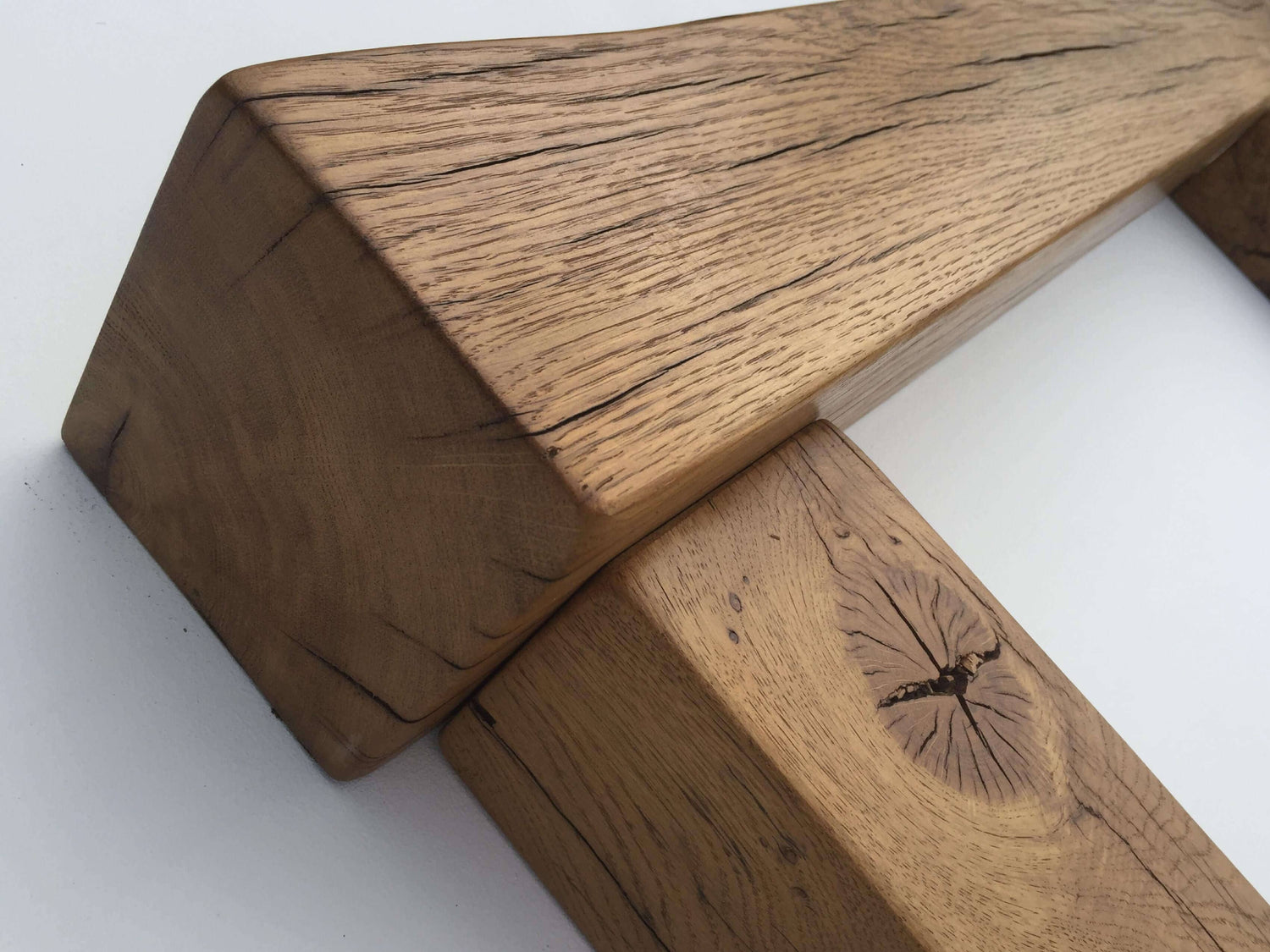
If every centimetre is covered, you lose much of the reason for choosing solid oak in the first place. Leaving a little space between objects allows the grain, knots and natural variation in the timber to remain part of the finished display.
- Keep Everyday Things Within Reach
The things you use most should be easiest to get to. In a kitchen, that might mean everyday mugs and bowls on the lower shelf. In an office, frequently used books and storage should sit where you can reach them without constantly standing or stretching.
Let practicality influence the arrangement rather than styling everything purely around appearance.
- Don't Make Every Shelf Identical
A row of perfectly matching objects can quickly make open shelving feel more like a display cabinet.
Mixing useful items with different shapes, heights and textures creates a more relaxed arrangement, particularly on rustic bracket shelves where natural materials and visible fixings are already part of the look.
Find a Shelf That Earns Its Space

The best shelving doesn't just fill an empty wall. It gives the room something it was missing, whether that's easier access to everyday kitchenware, somewhere for a growing book collection or a way to finally put an awkward alcove to work.
Explore our oak bracket shelves to find solid oak shelving in the depth, bracket style and finish that suits how you want to use your space. If you'd prefer the support to disappear altogether, our oak floating shelves offer a cleaner alternative with concealed fixings, while the wider oak shelves collection gives you more ways to introduce handcrafted timber storage around the home. Pine shelves are also available if you're looking for a different timber option.
Start with what you need the shelf to do, then choose the design around it. That way, your new shelving won't just look good on the wall. It'll make the room work a little better too.