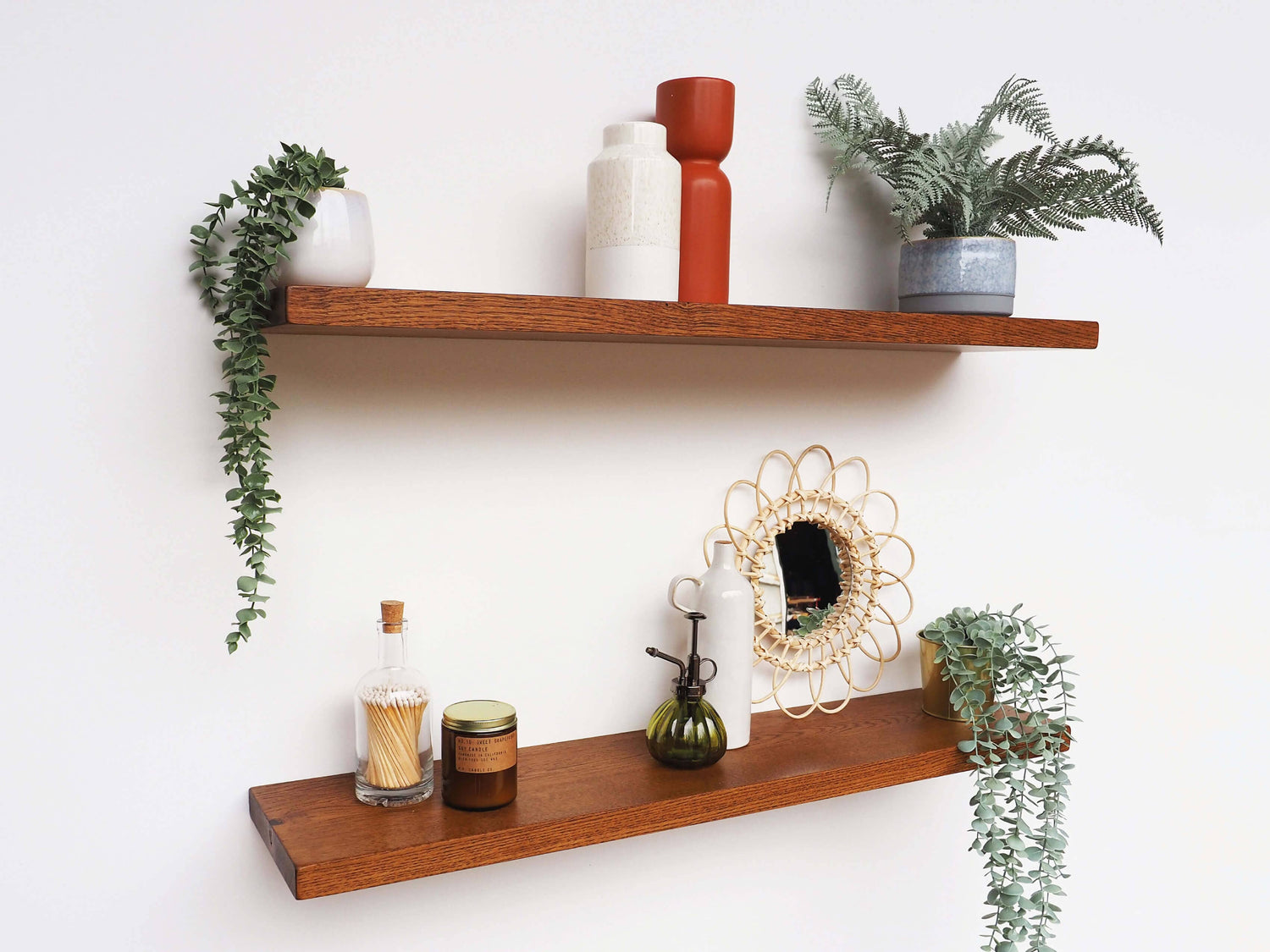

Can You Put Oak Shelves on Plasterboard Walls?
Yes, you can put oak shelves on plasterboard walls, provided the shelf, fixings and condition of the wall are suitable for the job.
Plasterboard doesn't mean you're limited to very lightweight shelving, nor does every fixing necessarily have to go directly into a timber stud. The main difference is that you need a fixing system designed to work with plasterboard rather than the conventional plugs you might use when fixing into brick or blockwork.
This is particularly important with solid timber shelving because the oak itself contributes to the overall load before you've added any books, plants or other items. Our shelves for plasterboard walls are set up with this in mind, using specialist fixing systems that allow you to fit a proper timber shelf to suitable plasterboard walls.
Why Is Fixing a Shelf to Plasterboard Different?

If you've previously installed shelves onto brick or blockwork, plasterboard requires a slightly different approach.
With a solid masonry wall, suitable fixings can anchor directly into the brick, block or stone behind the shelf. Plasterboard is a relatively thin sheet material and there is usually a cavity behind it, so a standard masonry plug isn't designed to provide the same type of fixing.
Instead, the fixing needs to be suitable for the plasterboard construction and capable of creating a secure anchor at the fixing point.
|
Solid Masonry Wall |
Plasterboard Wall |
|
Fixing anchors into brick, block or stone |
Specialist fixing anchors to the plasterboard |
|
Suitable masonry plugs and screws can be used |
Plasterboard-specific fixings are required |
|
Solid material sits behind the fixing point |
There is usually a cavity behind the board |
The wall construction isn't the only consideration. The length, depth and weight of the shelf, together with what you intend to store on it, all influence the demands placed on the finished installation.
How Do Traditional Beams Shelves Fix to Plasterboard?

We've already considered the fixing method when putting together our plasterboard shelving range, so you aren't left with a standard timber shelf and the problem of finding a suitable way to attach it to a hollow wall.
The fixing system varies depending on whether you choose a floating shelf or a design with visible brackets.
Floating Shelves on Plasterboard

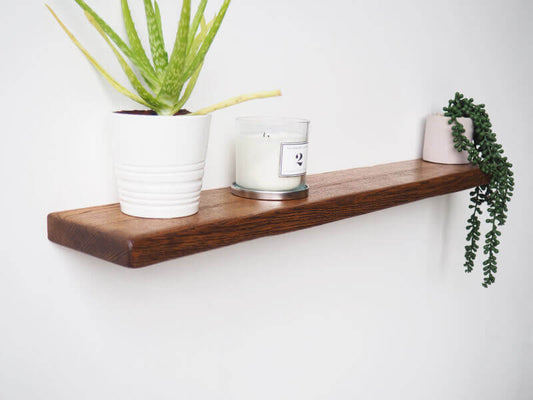
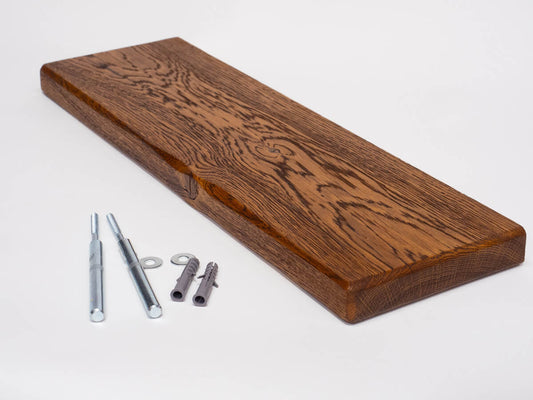
Our dedicated plasterboard floating shelves use adjustable Hafele concealed supports with Gripit plasterboard fixings. The back of the shelf is prepared to accommodate the concealed supports, allowing the fixing system to sit within the timber once everything is installed.
The Gripit fixings are designed to open behind the plasterboard and create a secure anchor within the wall construction. This allows the supports to do their job without visible brackets underneath the shelf, maintaining the clean floating appearance.
It's a useful option if you want solid timber to provide the character without the fixing system becoming part of the design.
Oak Shelves with Brackets

Floating shelves aren't the only option for a plasterboard wall. Our range also includes oak shelves with brackets, including lipped and inverted designs, with plasterboard versions supplied with appropriate Gripit fixings.
In this case, the brackets become part of the finished shelf rather than being concealed inside it. They can work particularly well in rooms where exposed steel complements the oak or where you want something with a slightly more rustic, traditional or industrial feel.
The choice between the two doesn't simply come down to which one is suitable for plasterboard. Both can be options when correctly specified and installed, so you can also think about which style works best in the room.
Do Shelves on Plasterboard Have to Be Fixed to Studs?
Not always. Fixing directly into a timber stud can provide excellent support, but specialist plasterboard fixings mean you don't necessarily have to position a shelf according to where the studs happen to sit behind the wall.
The Gripit fixings supplied with our plasterboard shelving are designed to anchor into the board itself. This gives you greater flexibility when deciding where a shelf should sit, which can be particularly useful when you're trying to centre it within an alcove, above furniture or in another specific position.
There are still situations where fixing into timber may be preferable, particularly if additional support is required. Wall construction also varies between properties, so it's worth understanding what you're working with rather than assuming every plasterboard wall has been built in exactly the same way.
If you're planning a particularly large shelf or intend to store heavier items, establishing the wall construction before installation will help you decide on the most appropriate fixing arrangement.
Is My Plasterboard Wall Suitable for a Shelf?

Before installation, take a little time to assess the wall itself. Knowing that it's plasterboard is only the starting point, as the thickness and condition of the board, what sits behind it and the shelf you're planning to install all need to be considered.
Check the Plasterboard Thickness
The Gripit system used with our plasterboard shelving is designed for plasterboard approximately 9.5mm to 15mm thick. If you're unsure of the thickness or construction of your wall, it's worth establishing this before installation rather than choosing a fixing based on an assumption.
Check the Condition of the Wall
Specialist fixings still rely on the plasterboard being in suitable condition. If the board is damaged, damp, crumbling or poorly secured, the underlying problem should be investigated before adding the weight of a solid timber shelf.
Existing holes and damaged sections of board also need to be considered when deciding where new fixing points should go.
Know What's Behind the Plasterboard
Pipes, electrical cables and other services can run through the cavity behind a plasterboard wall, so their position should always be considered before drilling.
Use an appropriate method to check the proposed fixing area and, if you're uncertain about what is behind the wall, seek professional advice before continuing.
Consider the Shelf and What You're Putting on It
A small oak shelf holding a couple of framed photographs places very different demands on a wall from a long, deep shelf filled with books.
Before choosing the shelf and fixing position, consider its own weight, overall length and depth, as well as what you intend to store on it and how that weight will be distributed.
This gives you a much more useful way to approach the project than simply asking whether plasterboard can take a shelf. Once you understand the wall and what you're asking the shelf to support, it's much easier to choose an appropriate setup.
Floating Shelf or Shelf with Brackets?

Once you've established that the wall is suitable, you can think more about the type of shelf you actually want in the room.
Both floating shelves and shelves with brackets can be fitted to suitable plasterboard walls when the correct fixing system is used, so the decision doesn't have to be based purely on wall construction.
A floating oak shelf keeps the fixings hidden within the timber, which works well when you want a cleaner finish or prefer the oak itself to provide the detail. This can be particularly effective in living rooms, bedrooms, home offices and alcoves where you don't want additional hardware competing with everything else in the space.
An oak shelf with steel brackets brings another material into the design. Lipped and inverted brackets create slightly different looks, while the combination of oak and steel can suit everything from traditional kitchens to more industrial-inspired interiors.
If plasterboard has previously made you rule out a particular shelving style, it's worth looking at the options available before compromising. Our plasterboard shelf collection includes both approaches.
What Can You Put on a Plasterboard Shelf?

A correctly installed plasterboard shelf can be used for plenty of the things we'd normally expect to find on shelving around the home.
That might include:
- Books and magazines.
- Framed photographs and artwork.
- Plants and decorative accessories.
- Kitchen jars and lighter everyday items.
- Bathroom storage.
- Office accessories and stationery.
The important consideration is the total load, rather than whether an individual object feels particularly heavy.
Our general guidance is that plasterboard shelving can support up to 20kg when correctly installed using suitable fixings, and this figure includes the weight of the shelf itself. Wall condition, shelf dimensions, the fixing arrangement and how the load is distributed can all affect what is appropriate for an individual installation.
We've gone into this in much more detail in our guide to how much weight a shelf can hold on a plasterboard wall, including why shelf weight and load distribution need to be considered together.
Does Shelf Size Matter on a Plasterboard Wall?
Yes. A longer or deeper shelf changes the forces acting on the wall, even before you start adding anything to it.
Depth is particularly worth thinking about because items positioned further away from the wall create greater leverage on the fixing points. A long shelf may also need additional support so that the load is shared appropriately across its length.
This is why we wouldn't recommend choosing a shelf purely according to the empty wall space available. Think about what the shelf will be used for and how much depth you genuinely need.
A narrower shelf for photographs, small plants or bathroom products has very different requirements from a deep shelf intended to hold rows of books or larger kitchen items.
Some of our longer bracket shelf configurations are supplied with additional brackets to provide support across the increased span, so always check the specification for the particular shelf you're ordering rather than assuming every length uses the same arrangement.
Where Do Plasterboard Shelves Work Well?

One of the advantages of specialist plasterboard fixings is that they open up parts of the home where shelving can otherwise feel awkward to plan.
Alcoves
An alcove is an obvious place to add useful storage, but stud positions don't always line up neatly with where you want each shelf. A plasterboard-specific fixing system can provide greater flexibility when planning the layout.
Home Offices
Floating shelves work particularly well above desks where floor space is limited. They can keep books, stationery and smaller office items within reach without introducing bulky furniture.
Bedrooms
A solid timber shelf can provide useful storage above a chest of drawers, beside a bed or on an otherwise unused wall. Floating designs are a good option where you want to keep the room feeling uncluttered.
Kitchens
Oak shelving can introduce some natural timber alongside kitchen cabinetry while providing somewhere for jars, mugs and frequently used items. Just make sure the intended contents remain within the appropriate load for the installation.
Bathrooms and Cloakrooms
Shelving can make use of limited wall space for toiletries, towels and smaller accessories. Where the room is exposed to higher levels of moisture, the shelf material and finish also need to be suitable for the environment.
When Might Additional Support Be Needed?
Specialist plasterboard fixings make many installations possible without structural alterations, but that doesn't mean every shelving project should be approached in exactly the same way.
Additional support may be worth considering when:
- The shelf is particularly long or deep.
- The shelf itself is unusually heavy.
- You intend to store heavier items.
- Weight will be concentrated in one area.
- The condition or construction of the wall creates uncertainty.
- Suitable timber studs are available in useful positions.
In these situations, additional brackets, fixing into timber or another installation approach may be more appropriate.
If you're unsure, it's better to check before ordering or drilling. Tell us the shelf dimensions you're considering, what you're planning to put on it and anything you know about the wall, and we can help you work through the options.
Before You Install: A Quick Check

By the time your shelf is ready to go up, you should have a reasonably clear picture of both the wall and how the shelf will be used.
Check that:
- The plasterboard is in good condition.
- The board thickness is suitable for the supplied fixing system.
- You have checked the proposed fixing area for pipes and cables.
- You are using the correct fixings for your shelf.
- You know the approximate weight of the shelf and what will sit on it.
- The length and depth are appropriate for the installation.
- Any additional supports required for your shelf are being used.
- You've read the installation information supplied for the product.
If anything doesn't look right once you start assessing the wall, stop and investigate it rather than trying to make the fixing work regardless.
Choosing Shelves for Plasterboard Walls
A plasterboard wall doesn't have to mean giving up on the solid timber shelf you had in mind. The important part is choosing shelving designed for the wall construction and making sure the fixing method, shelf dimensions and intended use all work together.
Our shelves for plasterboard walls include solid oak floating shelves, more rustic and aged timber options, pine shelves and oak shelving with visible steel brackets, giving you plenty of choice without having to improvise a fixing system afterwards.
If you already know where the shelf is going but you're unsure which option is suitable, get in touch with the Traditional Beams team before ordering. You can also take a look at our installation information for further guidance on the fixing systems supplied with our shelving.