
Are Pine Floating Shelves Strong Enough?
One of the most common questions homeowners ask before buying pine shelving is whether it will be strong enough for everyday use. It's an understandable concern. Pine is classed as a softwood, which often leads people to assume it's fragile or unsuitable for heavier items. In reality, solid pine has been used in homes for generations, from furniture and flooring to structural timber and joinery.
When it comes to floating shelves, strength is rarely determined by the timber alone. The thickness of the shelf, the quality of the brackets, the type of wall and the way the load is distributed all play an important role in how the shelf performs once installed.
Understanding those factors will give you a much clearer picture of what pine floating shelves are capable of and whether they're the right choice for your home.
In This Guide
- How strong is pine?
- What actually determines shelf strength?
- What can pine floating shelves hold?
- Pine floating shelves on different wall types
- Pine vs oak floating shelves
- Common mistakes that reduce shelf strength
- Choosing the right shelf for your home
How Strong Is Pine?

The word "softwood" can sometimes be misleading. While pine is technically softer than hardwoods such as oak, it remains a durable and reliable timber that is used throughout the construction and furniture industries. In fact, many of the timber structures hidden within modern homes are built from softwoods because they offer an excellent balance of strength, stability and practicality.
For shelving, the important distinction is that we're talking about solid pine rather than manufactured boards such as MDF or chipboard.
A well-made solid pine shelf benefits from:
- Natural strength and rigidity
- Genuine wood grain throughout
- Better long-term durability than many manufactured alternatives
- The ability to be refinished and maintained over time
This is one of the reasons solid pine shelving remains popular with homeowners looking for natural timber without the higher cost often associated with hardwoods.
What Actually Determines Shelf Strength?

One of the biggest misconceptions about shelving is that strength comes solely from the timber. In reality, several different factors work together to determine how much weight a floating shelf can comfortably support.
Shelf Thickness
A thicker shelf generally provides greater rigidity and can help reduce movement under load. This is particularly important for longer shelves where the weight needs to be distributed across a greater span.
Bracket Design
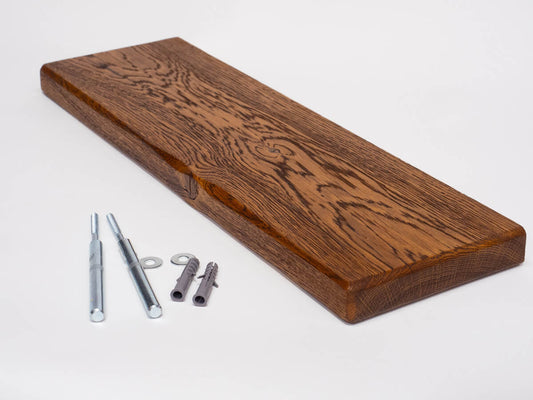
With floating shelves, much of the strength comes from the concealed support system hidden within the shelf itself. A high-quality bracket distributes weight more effectively and helps keep the shelf stable over time.
Wall Type
The wall you're fixing into can have just as much influence on strength as the shelf itself. Solid masonry walls typically provide the strongest fixing points, while plasterboard walls often require specialist fixings or dedicated support systems. For customers installing shelves onto plasterboard, our Shelves for Plasterboard Walls collection has been specifically designed around these requirements.
Load Distribution
How weight is placed on the shelf matters. A shelf carrying evenly distributed books or decorative accessories will often perform very differently from one carrying a single heavy item positioned in one location.
Looking at the whole installation rather than just the timber itself provides a far more accurate picture of how a shelf will perform.
What Can Pine Floating Shelves Hold?

For most households, the answer is quite a lot!
Solid pine floating shelves are regularly used throughout the home for both storage and display purposes. When installed correctly using suitable fixings, they're more than capable of supporting many of the items people typically place on shelving.
Common Uses for Pine Floating Shelves
|
Item |
Suitable for Pine Floating Shelves? |
|
Books |
Yes |
|
Houseplants |
Yes |
|
Decorative accessories |
Yes |
|
Photo frames |
Yes |
|
Kitchen storage jars |
Yes |
|
Small speakers |
Yes |
|
Bathroom storage |
Yes |
This versatility is one of the reasons pine remains such a popular shelving material.
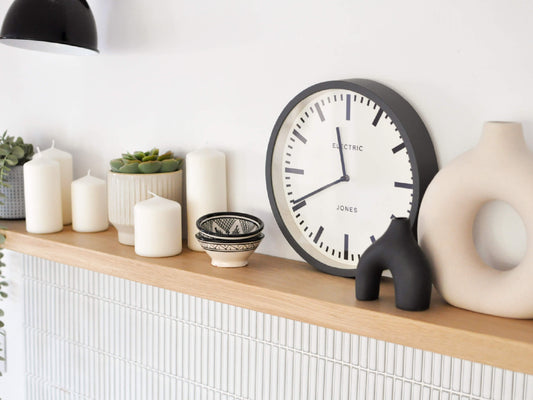
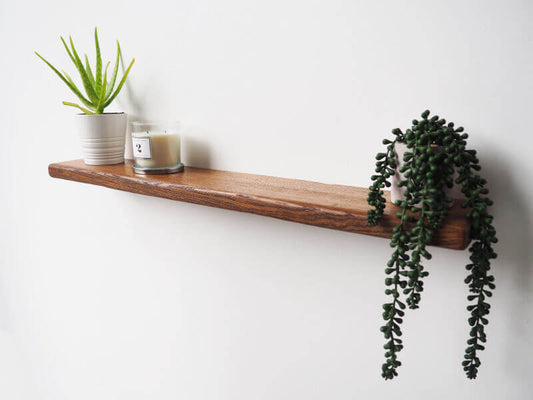
In kitchens, pine shelves are often used for crockery, glassware and dry food storage. In living rooms, they're commonly styled with books, artwork and plants. Bedrooms, home offices and hallways can all benefit from pine shelving without pushing the material beyond its capabilities.
Rather than focusing on whether pine is strong enough, it's often more useful to consider whether the shelf has been installed correctly and whether the chosen fixing method is suitable for the intended load.
Why Solid Pine Performs Differently to MDF Shelves
Many shelving comparisons focus purely on appearance, but the construction of the shelf itself can have a significant impact on long-term performance.
Solid pine shelves are made from natural timber throughout, which means the grain runs continuously through the material. This creates a shelf that feels more substantial and can often withstand years of everyday use.
Manufactured alternatives such as MDF and particleboard offer consistency and affordability, but they don't provide the same natural strength, character or longevity as solid timber.
Some of the advantages of solid pine include:
- Natural wood grain and character
- Greater resistance to edge damage
- The ability to sand and refinish the surface
- Better long-term durability
- A more authentic appearance
For homeowners looking to invest in shelving that can be maintained and enjoyed for years to come, solid pine often offers a significant advantage over manufactured alternatives.
Pine Floating Shelves on Different Wall Types

Even the strongest shelf will only perform as well as the wall it's attached to. This is why wall type often has a greater influence on shelf performance than the timber itself. A well-installed pine shelf on a suitable wall can comfortably support everyday household items, while poor fixings can quickly create problems regardless of whether the shelf is made from pine, oak or another material.
Solid Masonry Walls
Brick, stone and concrete walls generally provide the most secure fixing points for floating shelves. Because the brackets can be anchored directly into the masonry, the load is distributed effectively and the shelf remains stable over time. This makes masonry walls ideal for larger shelves and heavier displays. For most homeowners, this is the most straightforward installation scenario.
Plasterboard Walls
Plasterboard often causes concern because it's naturally less robust than brick or stone. That doesn't mean floating shelves can't be installed successfully. The key is using the correct fixing method for the wall and intended load.
In some cases, fixing directly into timber studs provides the strongest solution. Where studs aren't available, specialist plasterboard fixings can often provide excellent support when installed correctly.
This is exactly why we developed our Shelves for Plasterboard Walls range, which combines suitable support systems and fixings for this type of installation.
Stud Walls
Timber stud walls can provide excellent support when the brackets are fixed directly into the studs themselves. The challenge is ensuring the fixings align with the structural elements hidden behind the plasterboard. Once properly installed, stud walls can comfortably support floating shelving for everyday household use.
Understanding your wall type before installation is often one of the most important steps in achieving a strong and reliable result.
Pine vs Oak Floating Shelves: Does Oak Hold More Weight?

Because oak is denser than pine, many people assume that oak floating shelves automatically hold significantly more weight.
Oak is certainly the harder and heavier timber. It offers greater resistance to dents and wear, and it generally feels more substantial once installed. However, when it comes to floating shelves, the overall installation often has a greater influence on weight capacity than the timber itself.
A properly installed pine shelf with high-quality concealed brackets can comfortably support many of the same household items as an oak shelf.
The differences become more noticeable when:
- Shelves are particularly long
- Loads are consistently heavy
- The installation is subjected to frequent wear
- Maximum durability is the priority
For everyday applications such as books, decorative accessories, kitchen storage and household display items, both pine and oak perform extremely well when installed correctly. The decision between the two is often driven more by appearance, character and budget than by strength alone.
For homeowners comparing both options, our Oak Floating Shelves guide explores the differences in more detail.
Common Mistakes That Reduce Shelf Strength
Many shelving problems aren't caused by the shelf itself. They're usually the result of installation choices that prevent the shelf from performing as intended.
Ignoring the Wall Type
A fixing method that works perfectly in brick may be completely unsuitable for plasterboard. Understanding the wall structure before installation is one of the simplest ways to avoid future issues.
Concentrating Weight in One Area
Floating shelves are generally strongest when weight is distributed evenly across the surface. A row of books spread across the shelf will often place less stress on the installation than a single heavy object positioned in one location.
Choosing the Wrong Shelf for the Job
Every shelf has its limits! While pine shelves are well suited to everyday storage and display, it's important to choose a size and support system appropriate to the intended use.
Overlooking the Brackets
Because floating shelf brackets are hidden, they're easy to forget about. In reality, the bracket system is one of the most important components of the installation and plays a major role in how the shelf performs over time.
Choosing the Right Pine Floating Shelf

Strength is important, but it shouldn't be the only factor when choosing shelving. The best shelves balance practicality with appearance, helping you create a space that works well while complementing the wider style of the home.
Pine remains one of the most popular shelving materials because it offers exactly that balance. It combines the character of real timber with the versatility needed for everyday living, making it suitable for everything from kitchen shelving and alcove displays to home offices and bedrooms.
Its lighter appearance also makes it particularly adaptable, working comfortably in country homes, cottage interiors, Scandinavian-inspired spaces and more contemporary settings.
At Traditional Beams, our Pine Floating Shelves are handcrafted to order using carefully selected timber and designed to provide lasting performance alongside the natural character that makes solid wood shelving so appealing.
For homeowners comparing different materials, it's also worth exploring our Oak Floating Shelves collection, while those installing onto plasterboard can find dedicated solutions within our Shelves for Plasterboard Walls range.
Frequently Asked Questions
Can pine floating shelves hold books?
Yes. Solid pine floating shelves are regularly used for books, provided they're installed correctly using suitable brackets and fixings.
Are pine shelves strong enough for kitchens?
Absolutely. Pine shelves are commonly used in kitchens for storing crockery, glassware, jars and other everyday items.
Can pine floating shelves be installed on plasterboard?
Yes. The correct fixings and support system are essential, which is why wall type should always be considered before installation.
Will pine shelves sag over time?
A well-made pine shelf installed correctly is unlikely to sag under normal household use. Shelf length, thickness and weight distribution all influence long-term performance.
Are pine floating shelves stronger than MDF shelves?
Solid pine generally offers greater durability, longevity and refinishing potential than MDF, while also providing the character and appearance of natural timber.
Do thicker pine shelves hold more weight?
In many cases, yes. Greater thickness can improve rigidity and help reduce movement, particularly on longer shelf spans.