
What Size Oak Fireplace Beam Do I Need?
There isn't a standard size oak fireplace beam that works for every home.
A beam that looks perfectly proportioned above a wood-burning stove could feel completely out of place above a larger chimney breast, while an oversized beam can quickly overwhelm a smaller room. The best fireplace beams aren't chosen by following a fixed formula. They're chosen by getting the proportions right.
In This Guide
- What determines the right fireplace beam size?
- Should a beam match the fireplace or chimney breast?
- Choosing the right beam depth
- Fireplace beam sizes for different fireplace styles
- Small rooms vs large rooms
- Common sizing mistakes to avoid
- When a made-to-measure beam is the best option
Finding the right beam for your fireplace

Before looking at specific measurements, it's worth understanding one important principle. Most people focus on the fireplace opening itself. In reality, the beam needs to work with the entire fireplace wall. The chimney breast, room size, ceiling height and fireplace style all play a role in determining what will look balanced once installed.
That's why two fireplaces with the same opening can often suit completely different beam sizes.
Start With the Chimney Breast, Not the Fireplace
One of the most common mistakes people make is measuring the fire opening and working from there. While the fireplace itself is obviously important, it's rarely the feature that determines how large the beam should be.
Instead, the beam should relate to the chimney breast as a whole.
Think about how the beam will sit within the wider fireplace wall rather than treating it as a standalone piece above the fire. A beam that feels balanced against the chimney breast will almost always look better than one that's simply matched to the opening below.
This is particularly noticeable in larger rooms where a narrow beam can make the entire fireplace feel undersized.
What should you measure?
|
Measurement |
Why It Matters |
|
Fireplace Opening |
Helps establish a minimum beam width |
|
Chimney Breast Width |
Usually the most important measurement |
|
Ceiling Height |
Influences how substantial the beam should feel |
|
Room Size |
Affects overall visual weight |
|
Fireplace Type |
Helps determine suitable depth and projection |
By considering all of these elements together, you'll end up with a beam that feels naturally proportioned rather than simply sized to fit a single measurement.
Width vs Depth: Which Matters More?

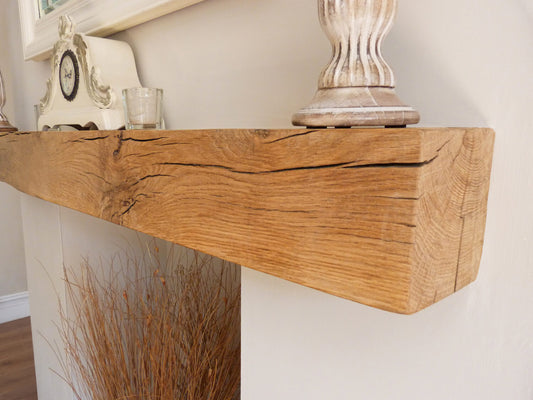
When people think about fireplace beam sizing, they almost always focus on length.In reality, depth often has a greater impact on how the beam feels once it's installed.
A long beam with a shallow profile can look relatively understated, while a deeper beam of the same length may become the dominant feature within the room. Rather than thinking purely in terms of measurements, it can help to think about visual weight.
Shallower beams typically suit:
- Contemporary interiors
- Media wall fireplaces
- Smaller chimney breasts
- Modern living spaces
They introduce natural oak without drawing too much attention away from the fireplace itself.
Medium depth beams are often the most versatile option.
They provide enough presence to frame the fireplace while remaining balanced within a wide range of interiors. This style tends to work particularly well in family homes where traditional and contemporary elements are mixed together.
Deep and chunky beams are best suited to:
- Period properties
- Farmhouse interiors
- Larger rooms
- Inglenook fireplaces
- Wood-burning stove installations
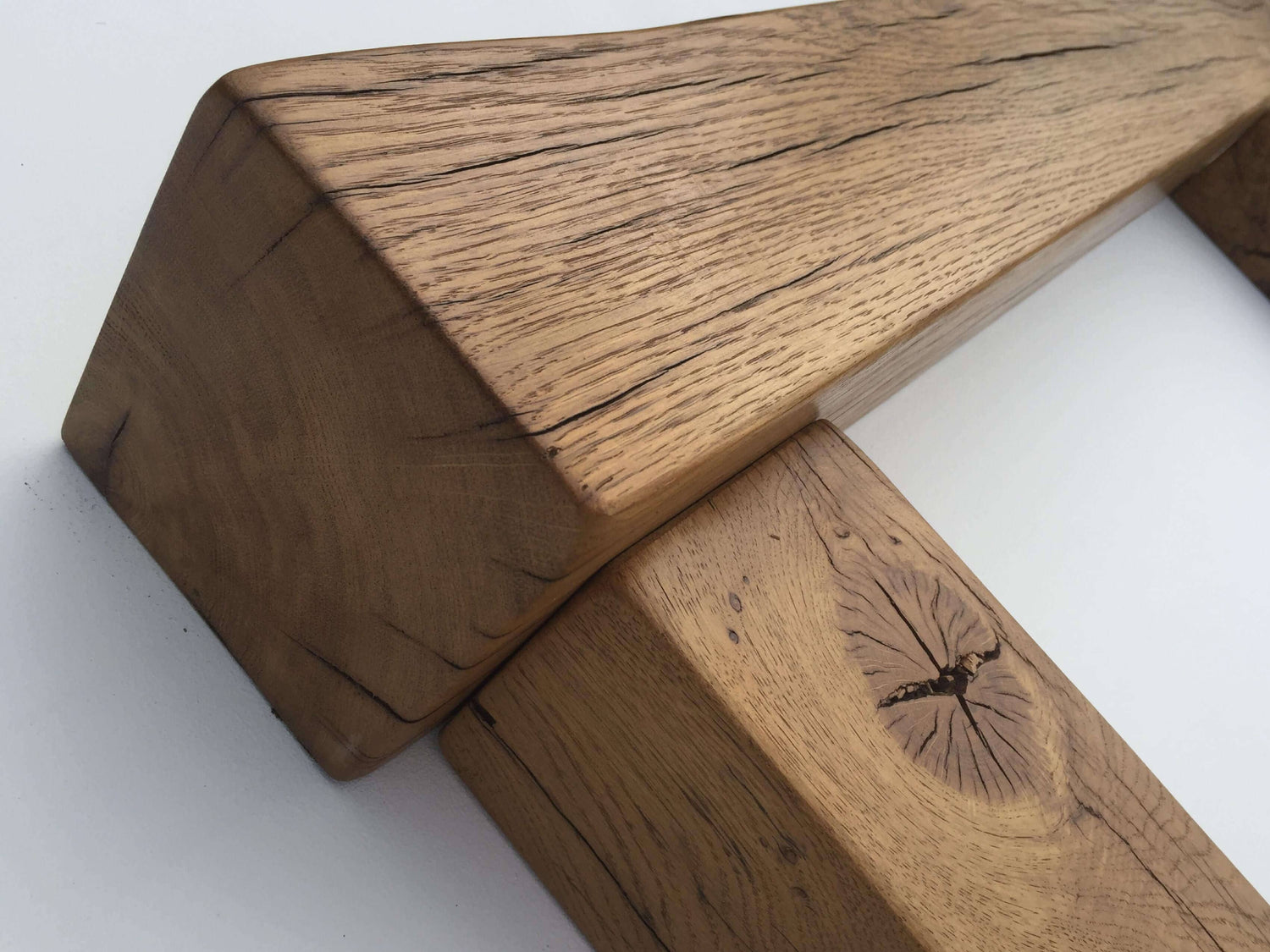
These beams create a stronger focal point and often become one of the defining features of the room.
How Much Should a Fireplace Beam Overhang?

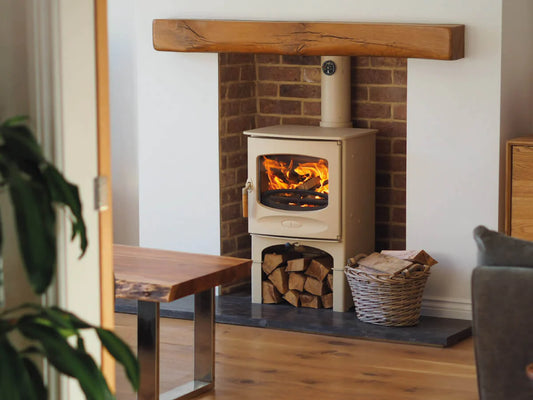
A fireplace beam will usually look better when it extends beyond the width of the fireplace opening. This additional width helps anchor the fireplace visually and prevents the beam from feeling disconnected from the chimney breast.
The amount of overhang doesn't need to follow a strict formula. Instead, it should feel balanced against the overall fireplace wall.
A small amount of overhang can help create a cleaner, more contemporary look, while a wider beam often feels more traditional and substantial.
The important thing is avoiding a beam that appears exactly the same width as the fire below, as this can sometimes make the entire feature feel cramped.
Fireplace Beam Sizes for Different Fireplace Styles
Different fireplace styles naturally lend themselves to different beam proportions.
Rather than choosing a beam in isolation, it helps to consider how it will interact with the fireplace beneath it.
Wood-Burning Stoves
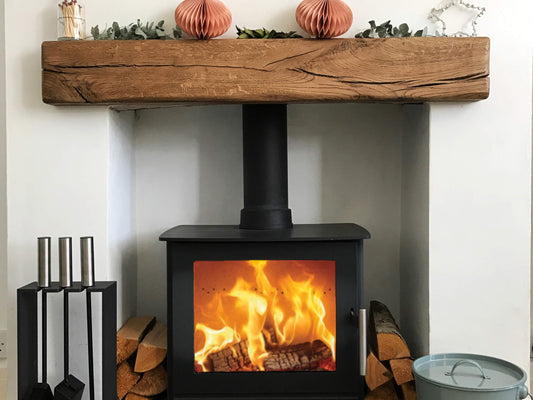
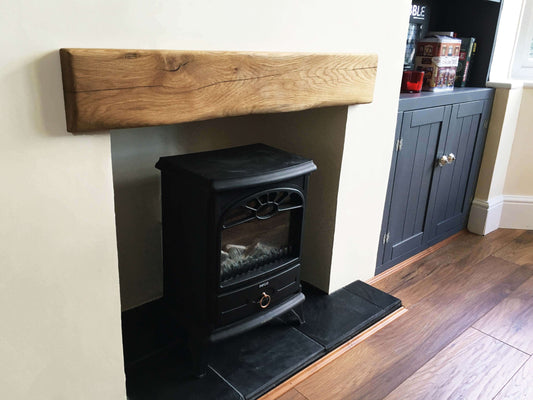
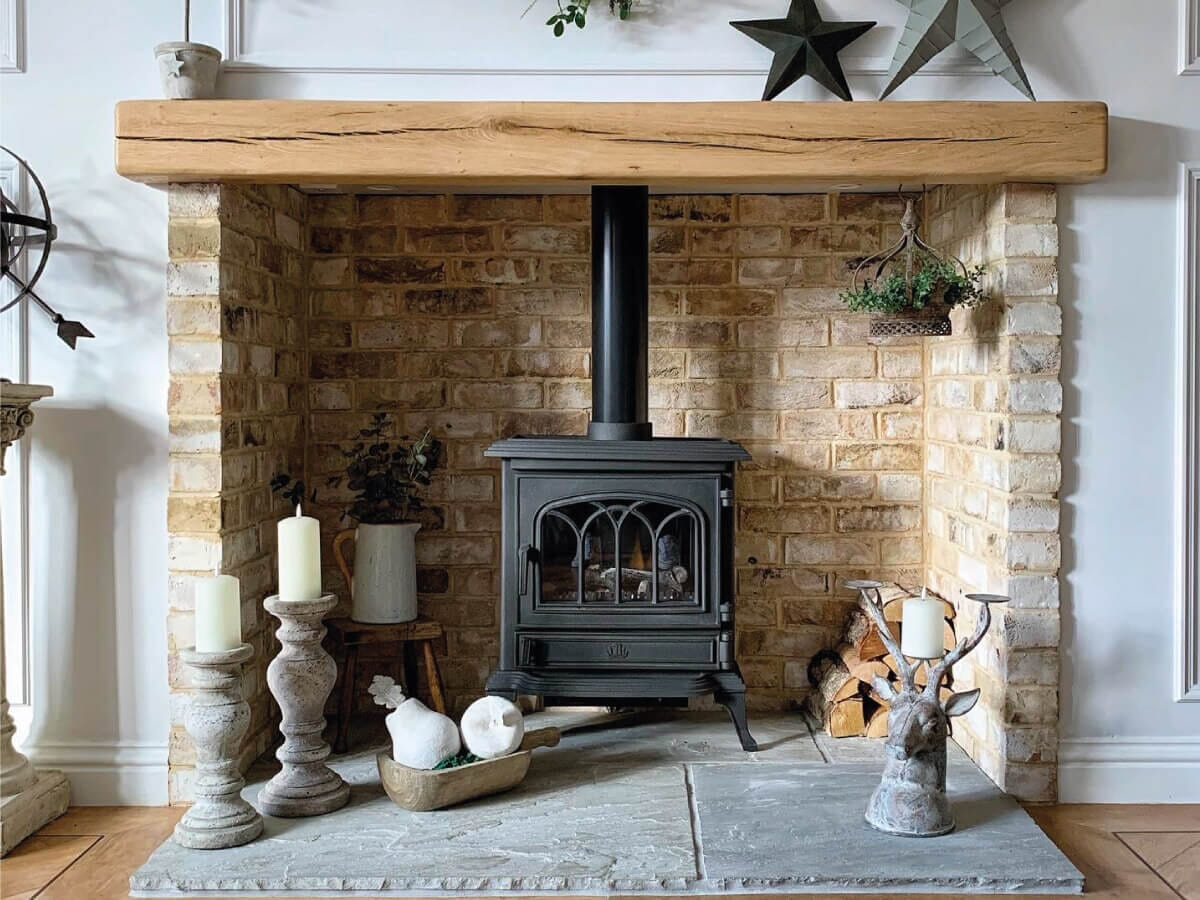
Wood-burning stoves are often paired with slightly deeper fireplace beams. The darker finish of the stove creates a strong contrast against the oak, allowing a chunkier beam to feel balanced rather than overpowering.
These installations often work particularly well with more characterful finishes and traditional styling. If you're creating a complete fireplace feature, it may also be worth exploring our Oak Fireplace Surrounds to complement the beam.
Open Fireplaces
Open fireplaces often have greater visual presence, which means the beam needs to feel substantial enough to match. A beam that's too shallow can sometimes feel lost above a larger opening, while a deeper profile can help reinforce the fireplace as the focal point of the room.
Media Wall Fireplaces
Contemporary media walls often benefit from cleaner, more restrained beam proportions. The aim is usually to introduce warmth and texture without interrupting the sleek appearance of the wider feature wall.
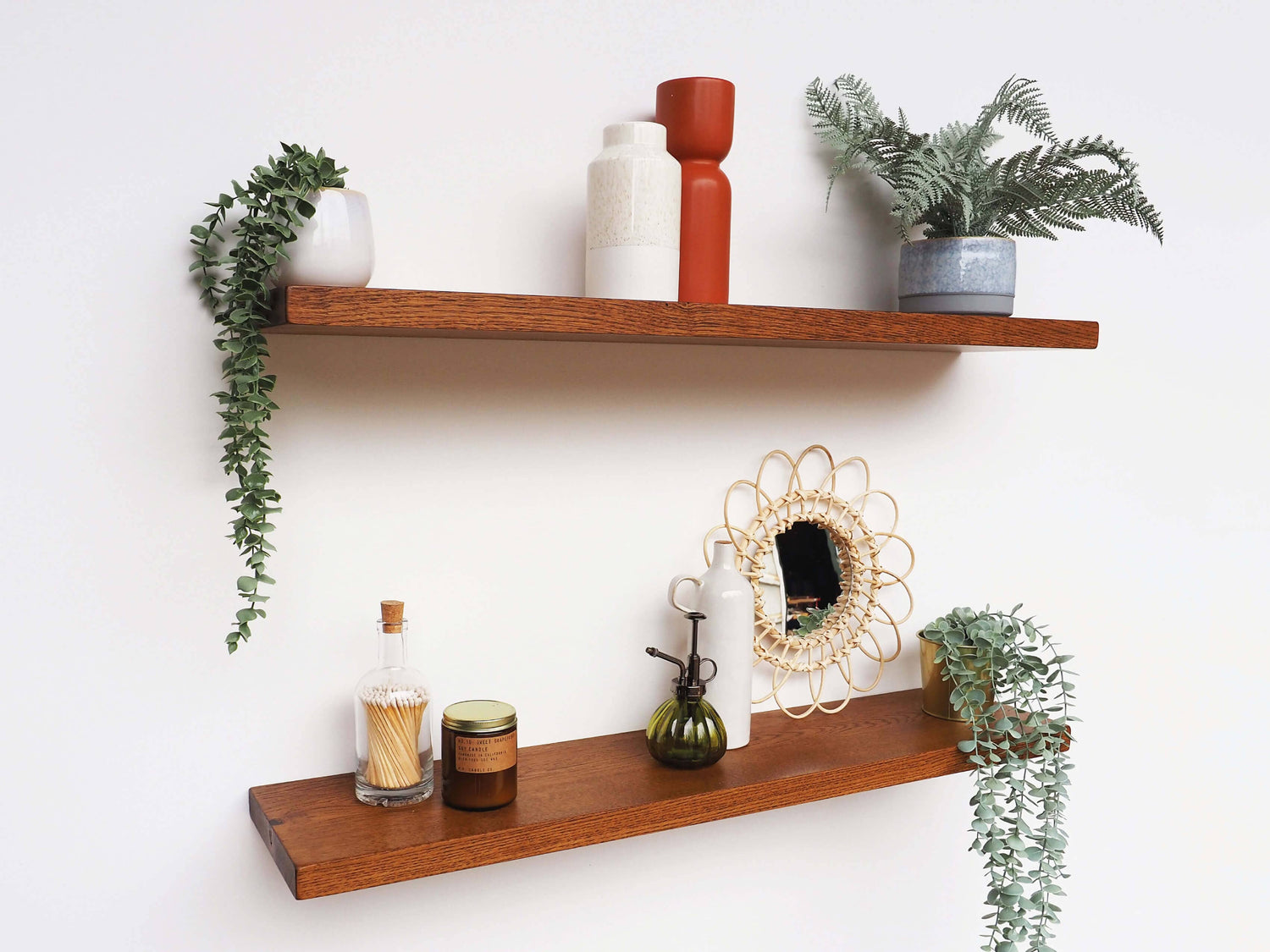
Many customers also pair their fireplace beam with matching Oak Floating Shelves within alcoves or adjacent walls to create a more cohesive finish.
Small Rooms vs Large Rooms
Room size has a significant influence on how a fireplace beam is perceived. The same beam can feel perfectly proportioned in one room and completely oversized in another.
|
Room Type |
Typical Beam Approach |
|
Smaller Living Rooms |
More restrained profiles and moderate depth |
|
Standard Family Rooms |
Medium-depth beams that balance presence and proportion |
|
Large Open-Plan Spaces |
Greater visual weight often works well |
|
Inglenook Fireplaces |
Deeper beams can help match the scale of the opening |
This isn't about following strict rules. It's about ensuring the beam feels connected to the overall scale of the room.
Common Fireplace Beam Sizing Mistakes

Most sizing mistakes come down to focusing on a single measurement rather than the wider space.
Matching the Fireplace Opening Exactly
The fireplace opening is only one part of the overall feature. A beam that relates to the chimney breast will often look more balanced than one that's simply sized to match the fire below.
Choosing a Beam That's Too Shallow
Length gets most of the attention, but insufficient depth can make a beam feel underwhelming once installed. This is especially true above larger fireplaces where the beam needs enough visual weight to hold its own.
Ignoring Ceiling Height
Higher ceilings can comfortably accommodate more substantial beam profiles. In lower rooms, oversized beams can sometimes feel unnecessarily heavy.
Oversizing for the Room
A large beam isn't always better. While chunky beams can look fantastic in the right setting, they should still feel proportionate to the room and surrounding fireplace.
When a Made-to-Measure Fireplace Beam Makes Sense
Not every fireplace suits a standard beam size. Older properties, bespoke fireplace projects and renovation work often benefit from a made-to-measure solution that allows the beam to fit the space precisely.
Made-to-measure beams can be particularly useful where:
- Chimney breasts are unusually wide or narrow
- Existing fireplace features create awkward dimensions
- You're trying to align with other timber elements
- You want to avoid cutting the beam on site
At Traditional Beams, we offer made-to-measure fireplace beams to help achieve the right proportions without compromise.
Finding the Right Fireplace Beam for Your Home

The best fireplace beam size isn't necessarily the biggest or the most impressive, it's the one that feels balanced within the room.
Many customers also combine fireplace beams with:
By considering the chimney breast, fireplace style, room proportions and beam depth together, you'll achieve a result that looks intentional and feels naturally connected to the wider space. At Traditional Beams, all of our Oak Fireplace Beams are made from solid European oak and prepared to order in our North Yorkshire workshop.

Fireplace Beam Sizing: Frequently Asked Questions
What is the most popular size for an oak fireplace beam?
There isn't a single standard size, as the right dimensions depend on the fireplace and chimney breast. Medium-depth beams tend to be the most versatile and suit a wide range of homes.
Can a fireplace beam be too big?
Yes. A beam that's too large can dominate the room and make the fireplace feel out of proportion. The best results come from balancing the beam with the size of the chimney breast and the room itself.
How deep should an oak fireplace beam be?
This depends on the style you're trying to achieve. Shallower beams often suit contemporary interiors, while deeper beams typically work better in traditional properties and larger fireplace settings.
Should a fireplace beam match the width of the chimney breast?
Not necessarily, but it should relate to it visually. Most beams work best when sized with the chimney breast in mind rather than simply matching the fireplace opening.
What size beam works best above a log burner?
Wood-burning stoves are often paired with slightly deeper fireplace beams, as the additional visual weight helps balance the fireplace feature and create a stronger focal point.
Do made-to-measure fireplace beams cost more?
Made-to-measure options can vary depending on the dimensions required, but they often provide the best solution where standard beam sizes don't suit the space.