
How to Choose the Right Oak Fireplace Beam
An oak fireplace beam can completely change the look of a fireplace. Whether it's installed above a wood-burning stove, a traditional open fire or a modern media wall fireplace, the right beam creates a focal point that helps anchor the entire room.
The challenge is that there isn't a single fireplace beam that works for every home. The size, finish, texture and style that looks perfect in a cottage inglenook may feel too heavy in a contemporary living room, while a beam that suits a smaller fireplace opening can easily look lost above a larger chimney breast.
At Traditional Beams, every oak fireplace beam is made from solid European oak and prepared to order. Over the years, we've found that most customers ask the same questions before buying. What size should I choose? Will a rustic beam suit my room? Should I choose a lighter or darker finish? And how do I make sure the beam looks in proportion to the fireplace?
This guide answers those questions and explains the key things worth considering before choosing an oak fireplace beam for your home.
In This Guide
- Why an oak fireplace beam makes such a difference
- Choosing the right beam size
- Rustic vs contemporary fireplace beams
- Selecting the right finish and colour
- Matching a beam to your fireplace style
- Common fireplace beam mistakes to avoid
- Why solid oak matters
- Choosing the right fireplace beam for your home
Why Your Fireplace Beam Matters More Than You Think

Many people initially focus on the fireplace itself, but in reality the beam often becomes the feature that draws the eye first.
A well-chosen oak fireplace beam helps create structure around the fireplace, framing the space and giving it more presence within the room. Even relatively simple fireplaces can feel more substantial once a solid oak beam is installed above them.
The beam also helps connect other elements within the room. Timber furniture, shelving, flooring and architectural details often feel more intentional when the fireplace becomes part of the wider design rather than a standalone feature.
This is particularly noticeable in open-plan spaces, where an oak fireplace beam can help create a stronger focal point and add warmth to larger rooms that might otherwise feel slightly sparse.
Choosing the Right Size Oak Fireplace Beam
Size is usually the most important decision you'll make.
A beam that's too small can look insignificant above the fireplace, while one that's too large may dominate the room and throw the proportions out of balance.
Start with the chimney breast
Rather than focusing purely on the fireplace opening, it's often better to consider the full chimney breast or feature wall. The beam should feel visually connected to the surrounding structure rather than simply matching the width of the fire itself.
As a general rule:
|
Fireplace Size |
Typical Beam Approach |
|
Small fireplaces |
Slimmer profiles with moderate projection |
|
Standard chimney breasts |
Medium-depth beams that create presence without overwhelming |
|
Large fireplaces or inglenooks |
Deeper, more substantial beams with stronger visual weight |
The exact dimensions will depend on ceiling height, room size and the overall look you're trying to achieve.
Consider depth as well as length
Length often gets most of the attention, but depth plays a huge role in how the beam feels once installed. A deeper beam creates a stronger focal point and tends to suit traditional fireplaces particularly well. Shallower beams can feel more refined and often work better in contemporary interiors where cleaner lines are preferred.
The key is balance. The beam should feel substantial enough to anchor the fireplace without becoming the only thing people notice when they enter the room.
Rustic vs Contemporary Oak Fireplace Beams

One of the most common questions we receive is whether to choose a more rustic beam or a cleaner, contemporary finish. The answer usually depends on the character of the property rather than simply following current trends.
Rustic fireplace beams
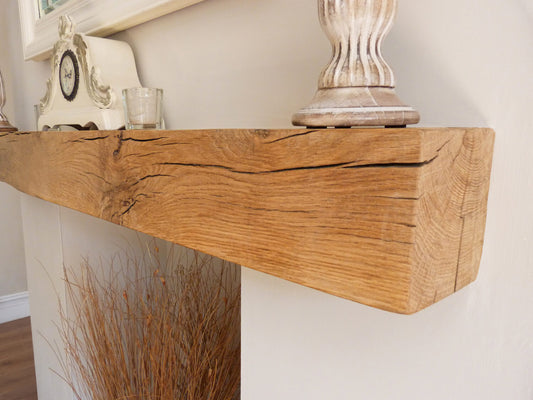
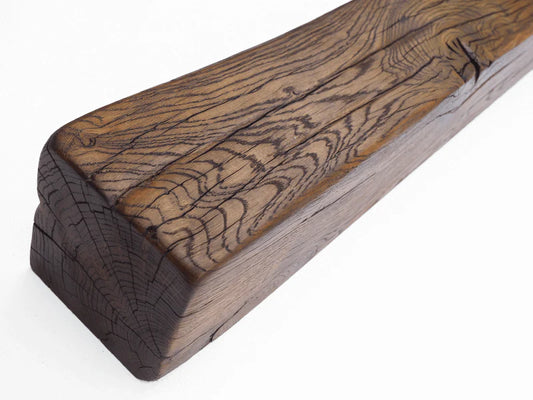
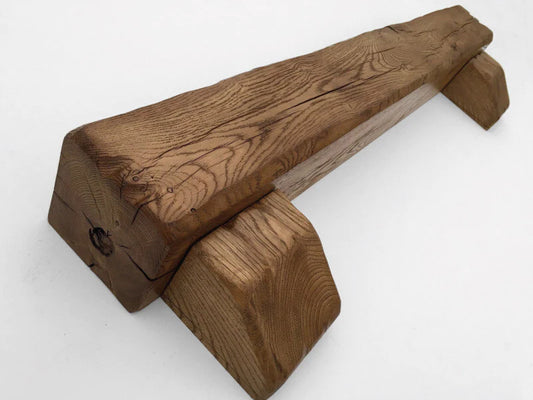
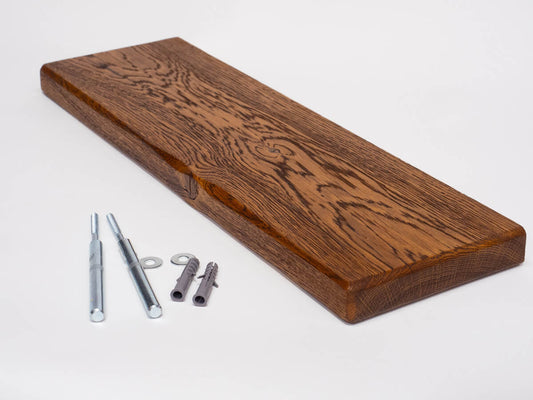
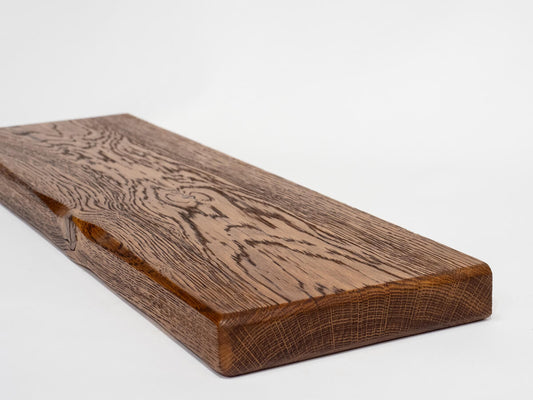
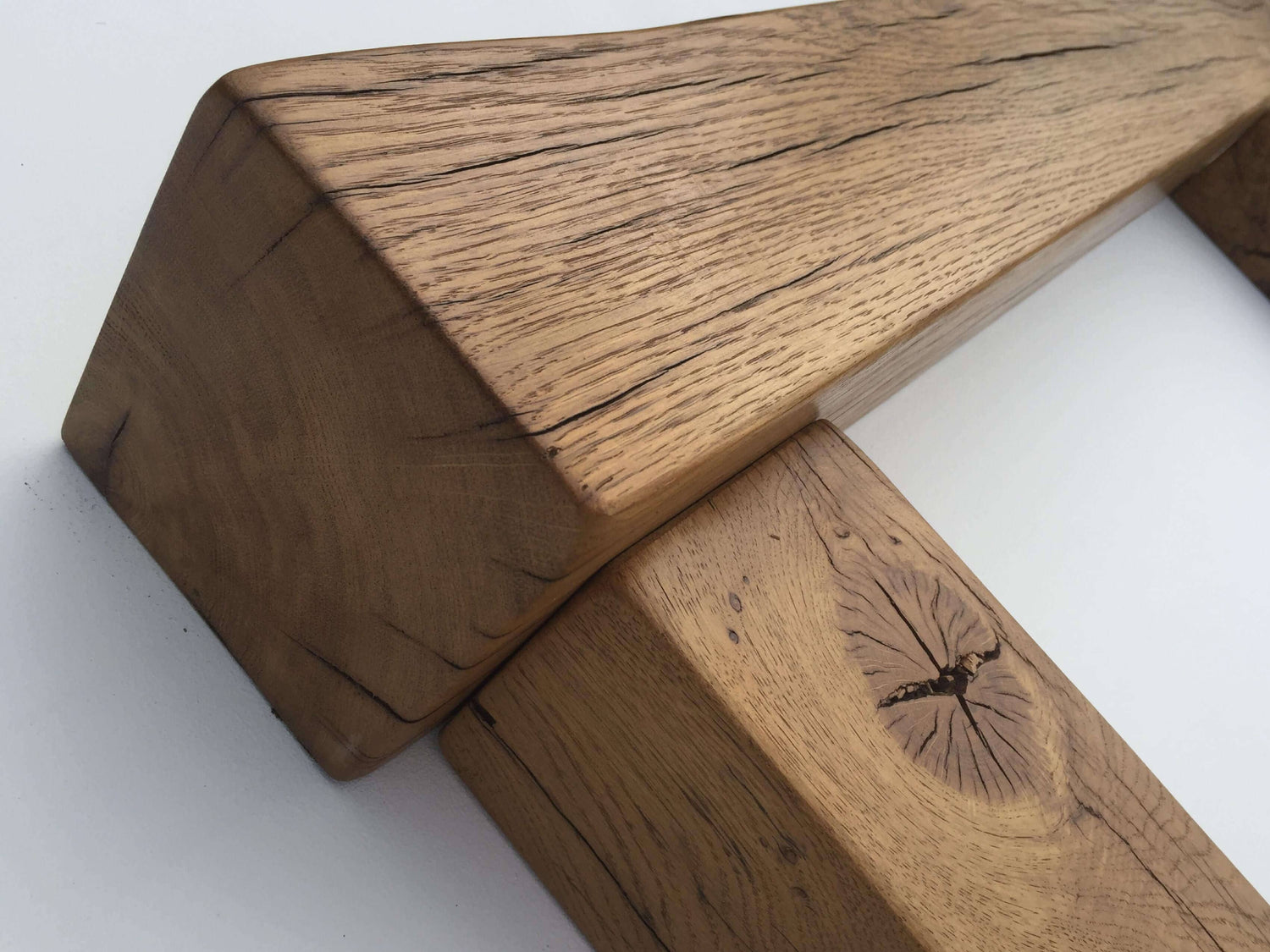
Rustic oak fireplace beams showcase more of the timber's natural character.
This may include:
- Visible grain variation
- Knots and natural markings
- Surface texture
- Characterful splits and checking
- A more traditional appearance
They work particularly well in:
- Period properties
- Farmhouse interiors
- Cottage-style homes
- Barn conversions
- Rooms with exposed timber features
Because oak is a natural material, these details help create the authentic appearance many customers are looking for.
Contemporary fireplace beams
Contemporary beams still retain the natural beauty of oak but tend to feel cleaner and more refined.
Typically, they feature:
- Smoother surfaces
- Sharper lines
- More consistent finishing
- A lighter visual appearance
They often suit:
- Modern homes
- New-build properties
- Minimalist interiors
- Contemporary living spaces
The goal isn't to remove the character of the timber but to create a finish that feels more aligned with modern design schemes.
Selecting the Right Finish and Colour

The finish you choose has a significant impact on the overall appearance of the fireplace. In many cases, customers spend more time choosing the beam profile than the finish, but the colour can completely change how the beam feels within the room.
Lighter finishes generally help create:
- A brighter appearance
- A more contemporary feel
- Softer contrast against walls
Darker finishes tend to introduce:
- Greater warmth
- More visual depth
- A stronger traditional character
The best choice usually comes down to the existing materials within the room.
Consider:
- Flooring
- Furniture
- Shelving
- Existing timber features
- Wall colours
The beam doesn't need to match perfectly, but it should feel like it belongs within the wider space rather than competing against it.
Matching an Oak Fireplace Beam to Your Fireplace Style
The best fireplace beams don't exist in isolation. They work because they complement the fireplace beneath them and feel in proportion to the room around them.
A beam that looks perfect above a traditional wood-burning stove may feel completely out of place above a sleek contemporary media wall, which is why it's worth considering the overall fireplace design before making a decision.
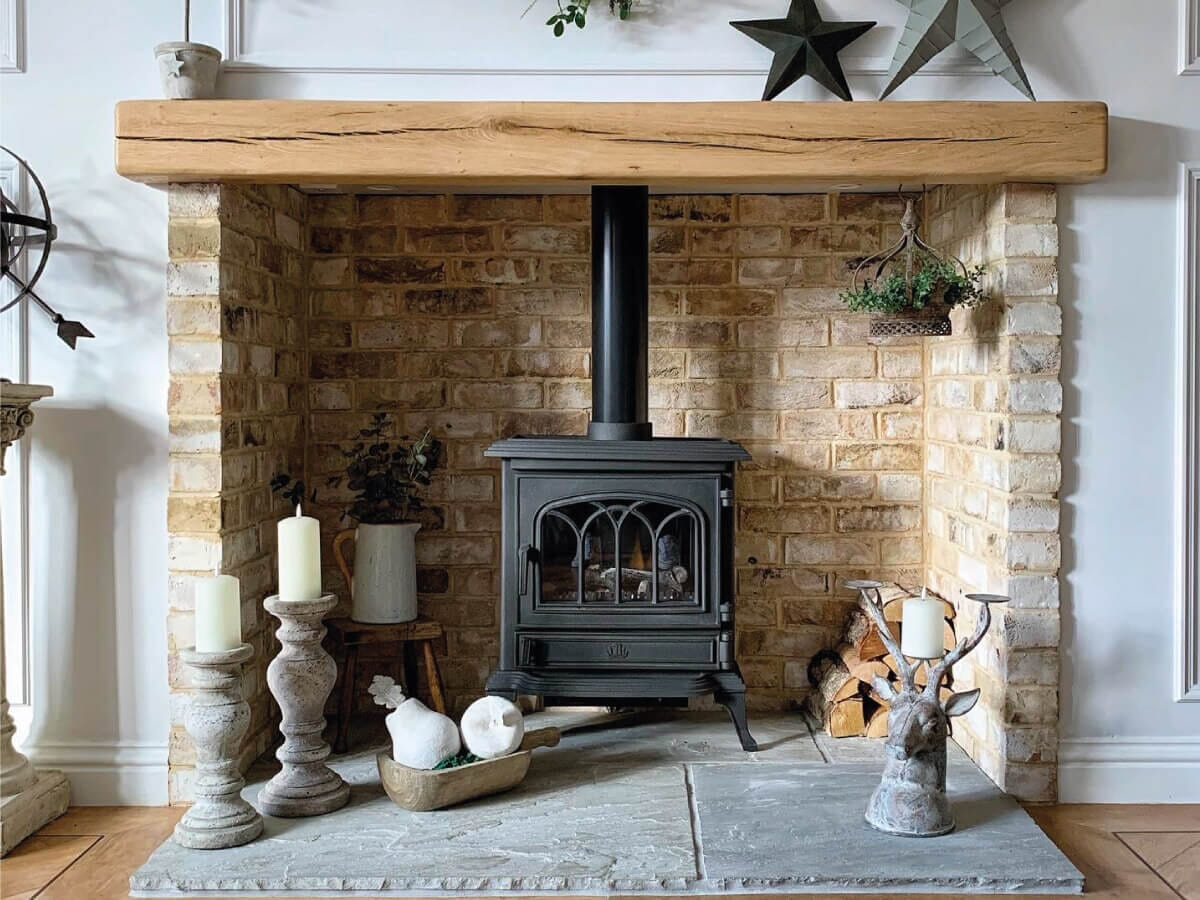
Oak Beams Above Wood-Burning Stoves
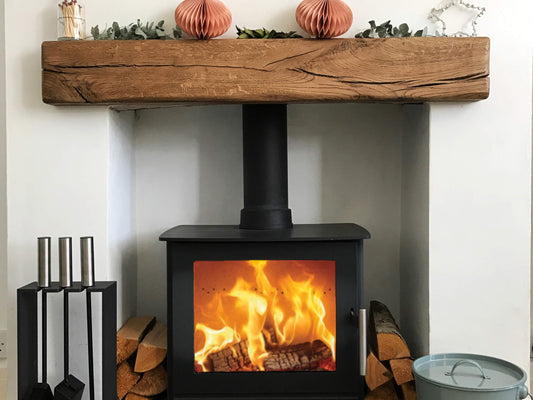
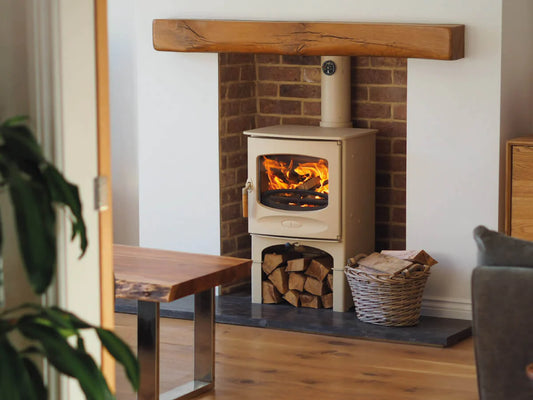
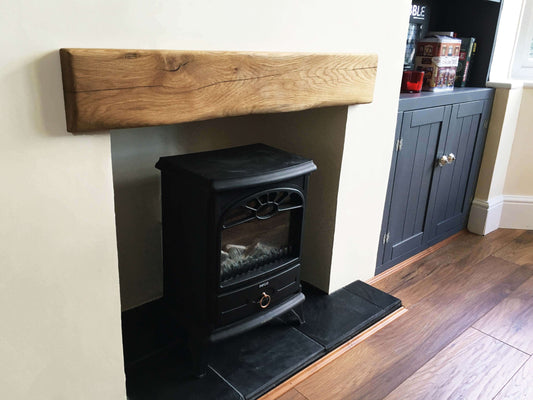
Wood-burning stoves remain one of the most popular applications for oak fireplace beams.
The contrast between natural timber and the darker finish of a stove creates a strong focal point, helping define the fireplace area even when the stove itself is relatively compact. For this type of installation, customers often favour beams with a little more character, including visible grain, natural texture and deeper finishes that enhance the warmth of the room.
This style works particularly well in:
- Period properties
- Country homes
- Farmhouse interiors
- Barn conversions
If you're creating a more traditional fireplace setting, it may also be worth exploring our Oak Fireplace Surrounds, which can be paired with a beam to create a more complete feature.
Oak Beams for Open Fireplaces
Open fireplaces often have more visual presence than stoves, which means the beam needs to feel substantial enough to balance the opening below. A beam that appears too small can make the fireplace feel unfinished, while a beam that is too large may dominate the entire chimney breast.
In these settings, proportion becomes especially important. The beam should complement the scale of the fireplace rather than compete with it. Where a room already features other timber details, such as Oak Window Beams or exposed oak features elsewhere in the property, choosing a complementary finish can help tie the space together.
Oak Beams for Contemporary Fireplaces and Media Walls
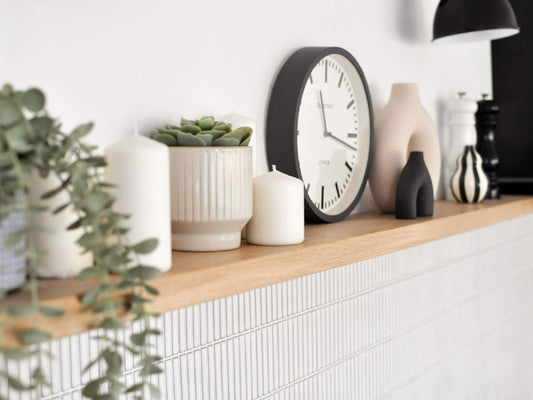
Oak beams aren't only suited to traditional homes. Many customers are now incorporating oak fireplace beams into modern interiors, particularly around media wall fireplaces where the warmth of natural timber helps soften the cleaner lines often associated with contemporary design.
In these settings, customers often choose:
- Cleaner beam profiles
- Lighter finishes
- More refined surface textures
- Simpler styling
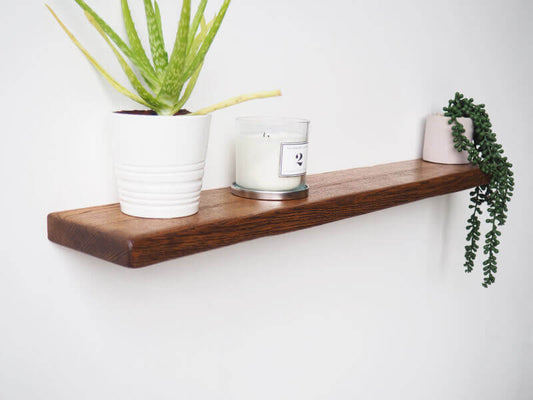
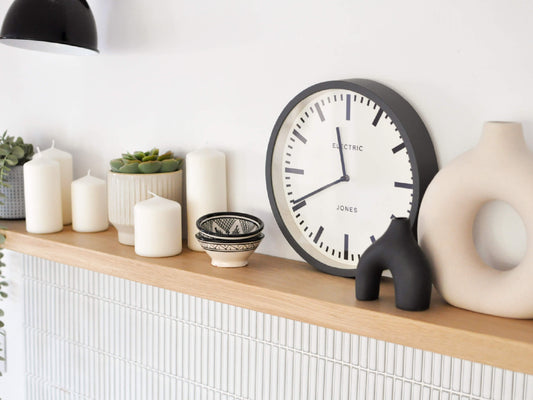
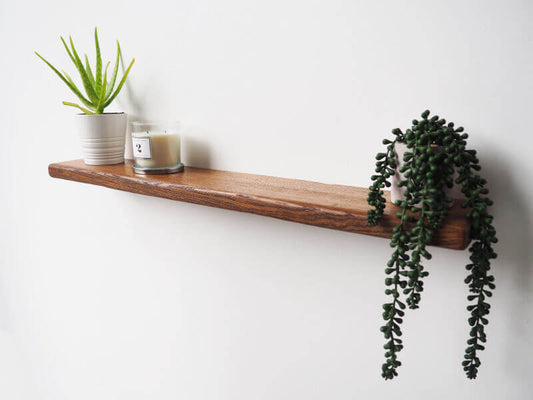
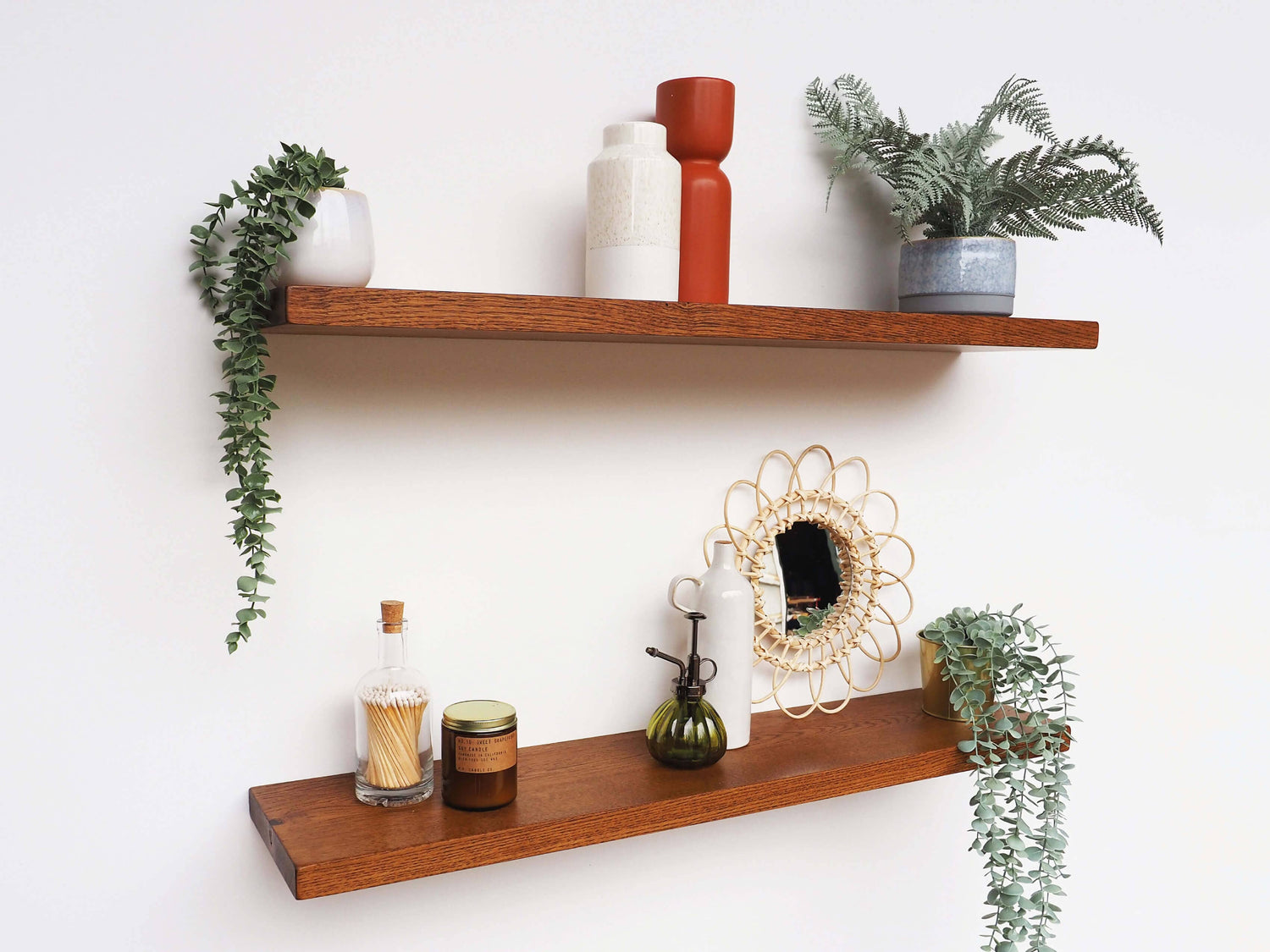
Pairing an oak fireplace beam with matching Oak Floating Shelves can also help create a cohesive feature wall, particularly where shelving sits either side of the fireplace or within adjacent alcoves.
Common Oak Fireplace Beam Mistakes to Avoid

Most customers spend a lot of time deciding which beam they like, but less time thinking about how it will actually work within the room. Over the years, we've seen a few common mistakes that are worth avoiding.
Choosing a Beam That's Too Small
This is probably the most common issue. Many people naturally focus on the fireplace opening itself, but the beam also needs to relate to the chimney breast and surrounding wall.
A beam that's too narrow or shallow can look disconnected from the rest of the fireplace, reducing the impact you're trying to create.
When in doubt, it's often better to consider the overall proportions of the chimney breast rather than just the fire below.
Focusing Only on Length
Length is important, but it's only one part of the equation. Depth and thickness have a significant influence on how substantial the beam feels once installed.
Two beams can have the same length but create completely different visual effects depending on their profile.
A deeper beam will naturally feel heavier and more traditional, while a slimmer profile often suits contemporary spaces better.
Choosing a Finish in Isolation
A finish that looks great on its own may not necessarily work within the room. Before choosing a colour, consider:
- Flooring
- Furniture
- Existing timber details
- Wall colours
- Fireplace materials
The goal isn't perfect matching. It's creating a finish that feels connected to the rest of the space.
Ignoring Other Timber Features in the Room
One of the easiest ways to create a more considered interior is by repeating materials throughout the space. For example, customers often combine their fireplace beam with:
Using complementary finishes across these elements can help the room feel more cohesive and intentional.
Why Solid Oak Matters
Not all fireplace beams are created equal. Some products on the market are manufactured using lightweight materials or hollow constructions designed to replicate the appearance of solid timber. While these can look convincing from a distance, they rarely offer the same authenticity, weight or character as real oak.
At Traditional Beams, all of our fireplace beams are made from solid European oak.
This means every beam features:
- Genuine grain patterns
- Natural variation in colour and texture
- Long-term durability
- Authentic character that develops over time
As a natural material, oak will continue to settle and mature within its environment. Small surface splits and natural movement are entirely normal and form part of the character that makes solid timber so appealing.
It's these details that give a real oak beam its sense of permanence and individuality.
Why Customers Choose Traditional Beams Fireplace Beams

Choosing an oak fireplace beam is about more than filling a space above a fireplace. It's about creating a feature that helps define the room for years to come. At Traditional Beams, every fireplace beam is prepared to order using carefully selected European oak and finished by hand in our North Yorkshire workshop.
Customers choose us because we offer:
- Solid oak construction
- A wide choice of finishes
- Made-to-measure options
- Traditional and contemporary styles
- Expert advice before ordering
Many customers also choose to carry the same oak finish throughout the home using complementary products such as Oak Floating Shelves, Oak Window Beams and our wider Oak Beams collection. The result is a more connected, balanced interior where each timber feature feels like part of the same story rather than a collection of separate elements.

Frequently Asked Questions
Should an oak fireplace beam be wider than the fireplace?
In most cases, yes. A fireplace beam usually looks best when it extends beyond the width of the fireplace opening itself. This helps create better visual balance and allows the beam to feel connected to the full chimney breast rather than just the fire below.
Do oak fireplace beams suit modern homes?
Absolutely. While oak beams are often associated with traditional properties, they can work just as well in contemporary interiors. Choosing a cleaner beam profile and a lighter finish can introduce warmth and texture without compromising a modern aesthetic.
What colour oak fireplace beam should I choose?
The best finish often depends on the surrounding materials within the room. Flooring, furniture, shelving and wall colours can all influence which finish feels most natural. Rather than matching everything exactly, aim for a finish that complements the wider space.
Can an oak fireplace beam make a small fireplace look bigger?
It can. A well-proportioned beam helps draw the eye across the full width of the fireplace wall, creating a stronger focal point and making the fireplace feel more substantial within the room.
Should my fireplace beam match my shelving?
It doesn't have to match perfectly, but using complementary timber finishes can help create a more cohesive look. Many homeowners pair fireplace beams with Oak Floating Shelves, Oak Shelves with Brackets or other oak features throughout the room to create continuity.
Are rustic or smooth oak fireplace beams more popular?
Neither style is universally more popular. Rustic beams tend to suit cottages, farmhouse interiors and period properties, while smoother beams are often chosen for contemporary homes and modern renovation projects. The best choice usually depends on the character of the property rather than current trends.
Can I use an oak fireplace beam if I don't have an open fire?
Yes. Oak fireplace beams are regularly installed above electric fires, media wall fireplaces and decorative fireplace openings. In many cases, the beam becomes the focal point regardless of the type of fire below.
How do I make an oak fireplace beam look more bespoke?
Paying attention to size, finish and surrounding details can make a huge difference. Pairing the beam with complementary features such as Oak Window Beams, Oak Floating Shelves or an Oak Fireplace Surround can help create a more integrated and custom-built appearance.