
How to Choose the Right Oak Beams for Your Home
Choosing oak beams isn’t just about picking a size or finish. The right beam should feel in proportion to your space, work with your existing features and suit the way the room is used.
At Traditional Beams, we work with solid European oak every day, producing beams for everything from single fireplace features through to full interior schemes. That experience has shown us that getting the details right early on makes a big difference to the final result. Whether you’re adding a single feature or planning a more complete design, oak beams offer a practical way to introduce structure, warmth and character without overcomplicating the space.
In this guide, we’ll cover:
- What to consider before choosing oak beams
- The different types of oak beams available
- How to choose the right size and proportions
- Which finishes work best in different spaces
- Where oak beams can be used throughout the home
- How to create a cohesive look with oak features
- The difference between solid and hollow beams
Let’s get started!
What Are You Using Oak Beams For?

Before looking at sizes or finishes, it’s worth being clear on how the beams will actually be used. This is the starting point for every other decision, as different applications require a completely different approach.
In most homes, oak beams fall into one of these categories:
Ceiling features – used to break up large flat ceilings and introduce structure
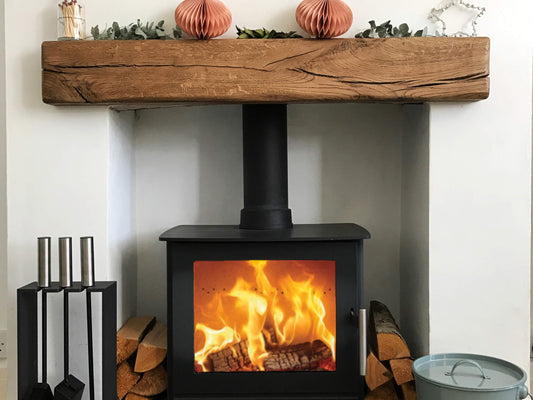
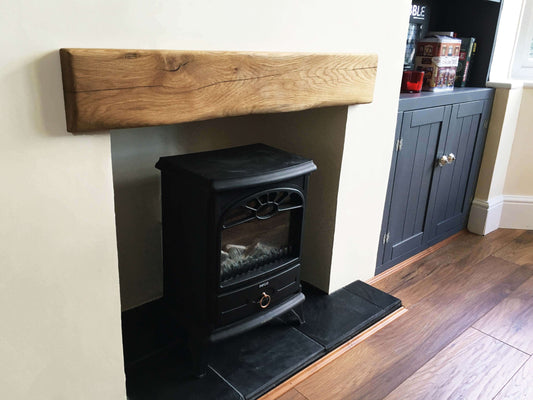
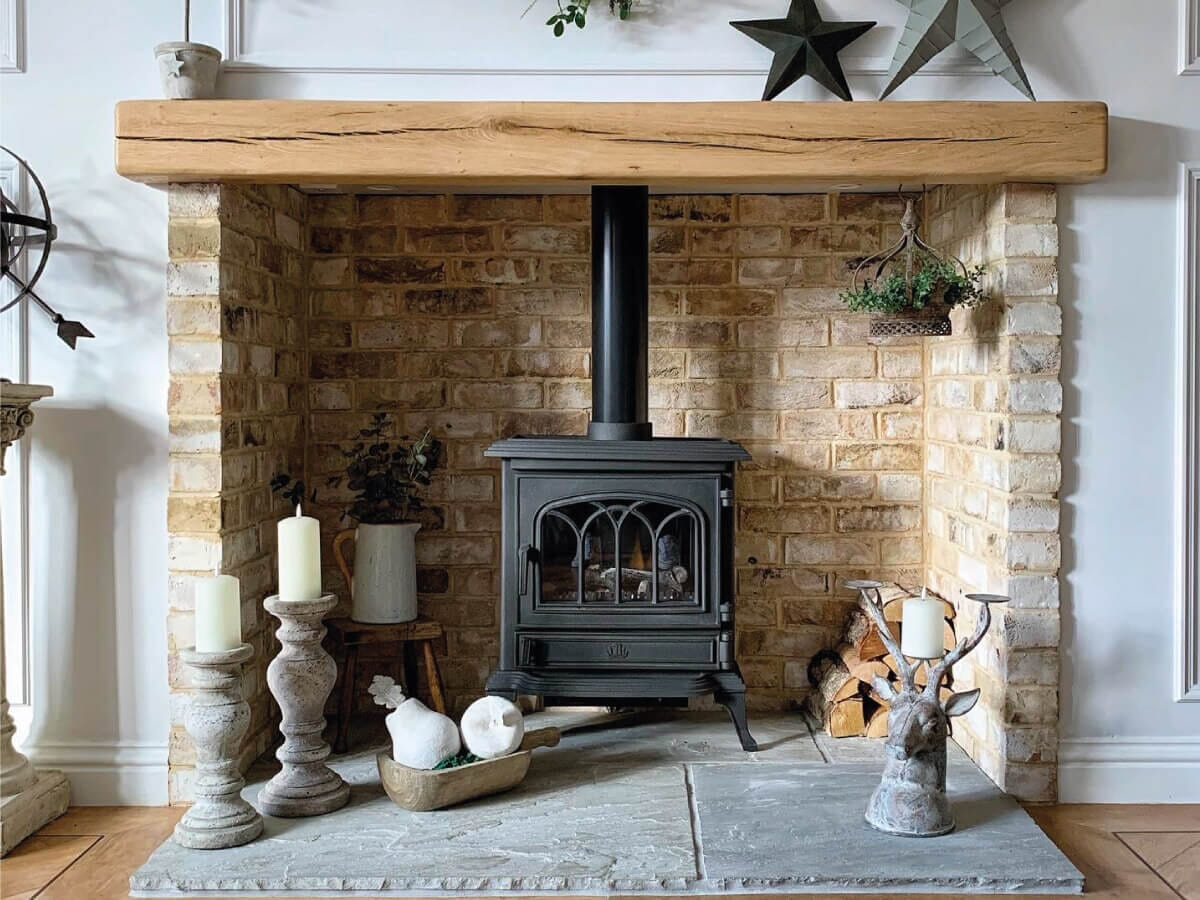
Fireplace features – typically acting as a focal point above a stove or fire, often using oak fireplace beams
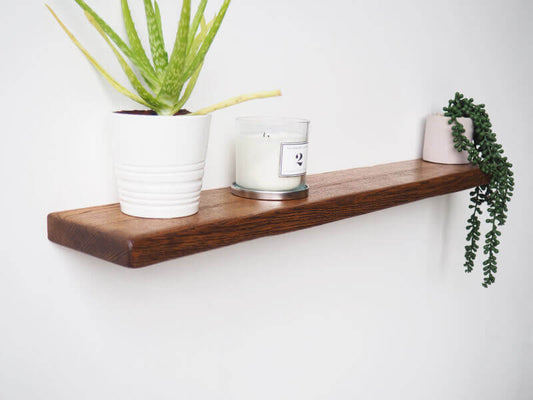
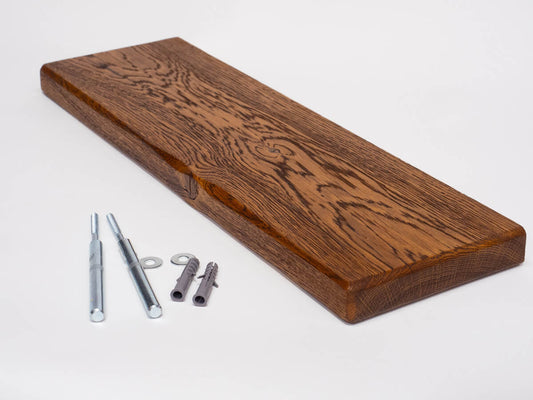
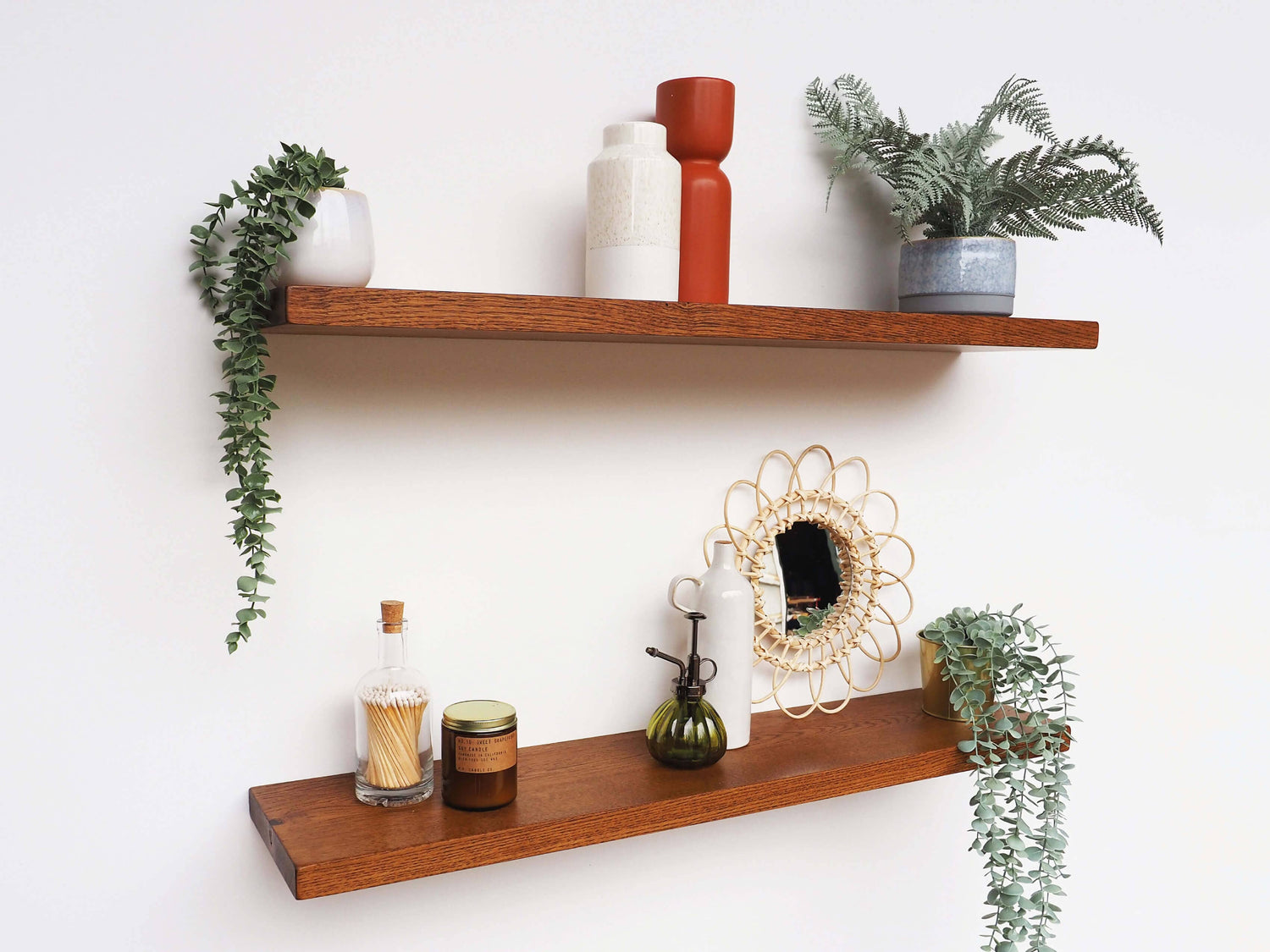
Shelving and alcoves – either as standalone shelves or paired with oak shelves for a more built-in look
Framing openings – adding detail above doors and windows with oak window beams
Full-room schemes – using multiple beams across ceilings, walls and features to create a consistent finish
What’s important here is that each use changes the requirements. A ceiling beam needs to feel balanced across a larger space, while a fireplace beam needs to feel more defined and central. A beam used for oak shelving has to work both visually and practically.
Taking a moment to decide how the beam will function in the room will help avoid choosing something that looks right in isolation but doesn’t quite work once installed.
Explore our full range of oak beams to find options suited to your specific project.
Choosing the Right Type of Oak Beam

Once you know where the beam will be used, the next step is choosing the right type. This is where a lot of the visual character comes from.
Air-Dried Oak Beams
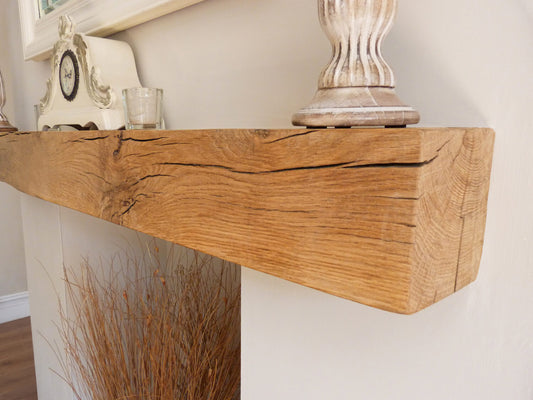
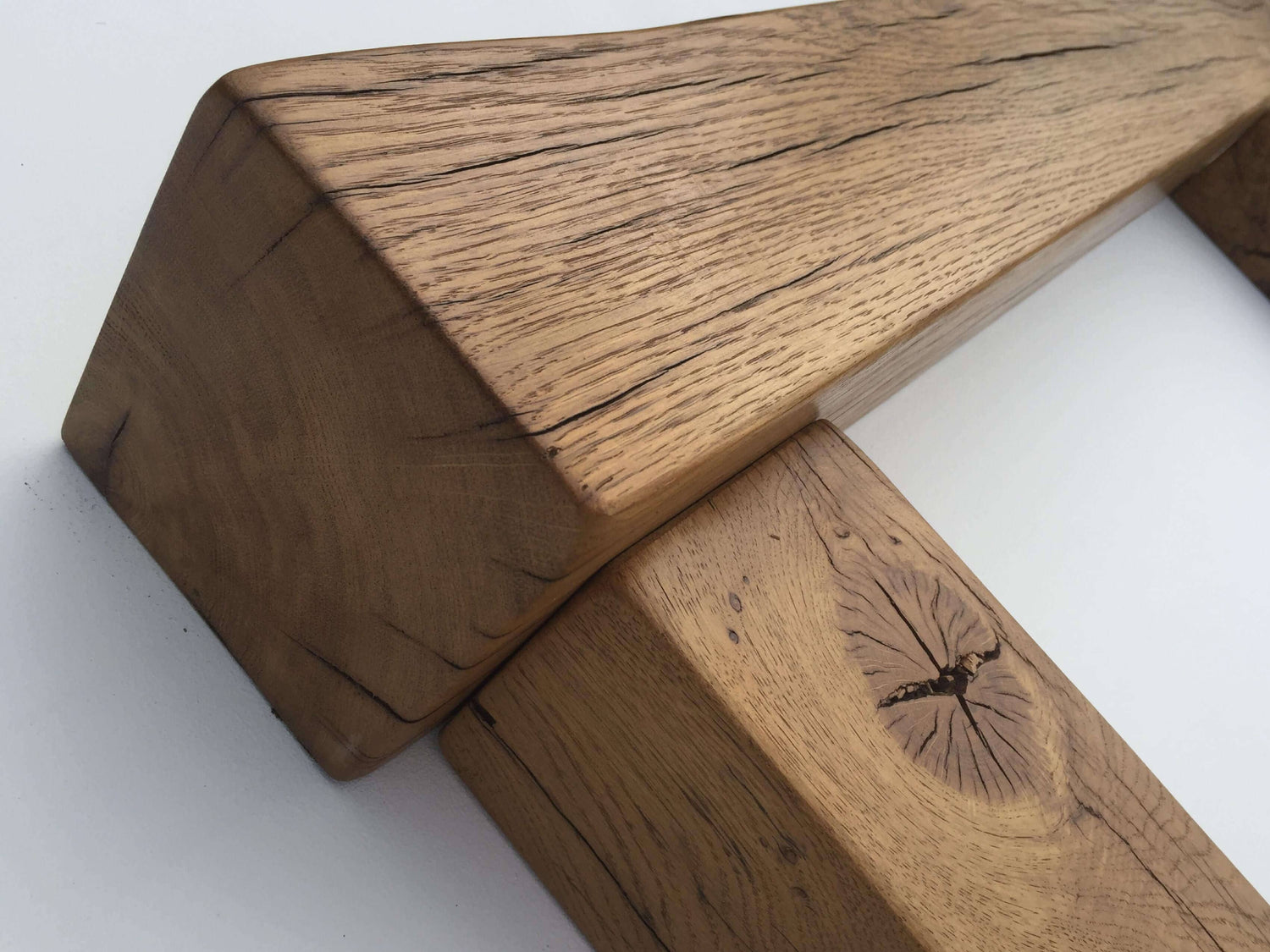
Air-dried beams are seasoned naturally over time, which helps reduce moisture while preserving the natural character of the timber.
You’ll typically see:
- Visible grain variation
- Knots and natural markings
- Small surface splits developing over time
These beams are often chosen for spaces where a more traditional or natural look is preferred. They tend to feel less uniform, which works well in period-style interiors or where you want the beam to feel established rather than newly installed.
Planed Oak Beams
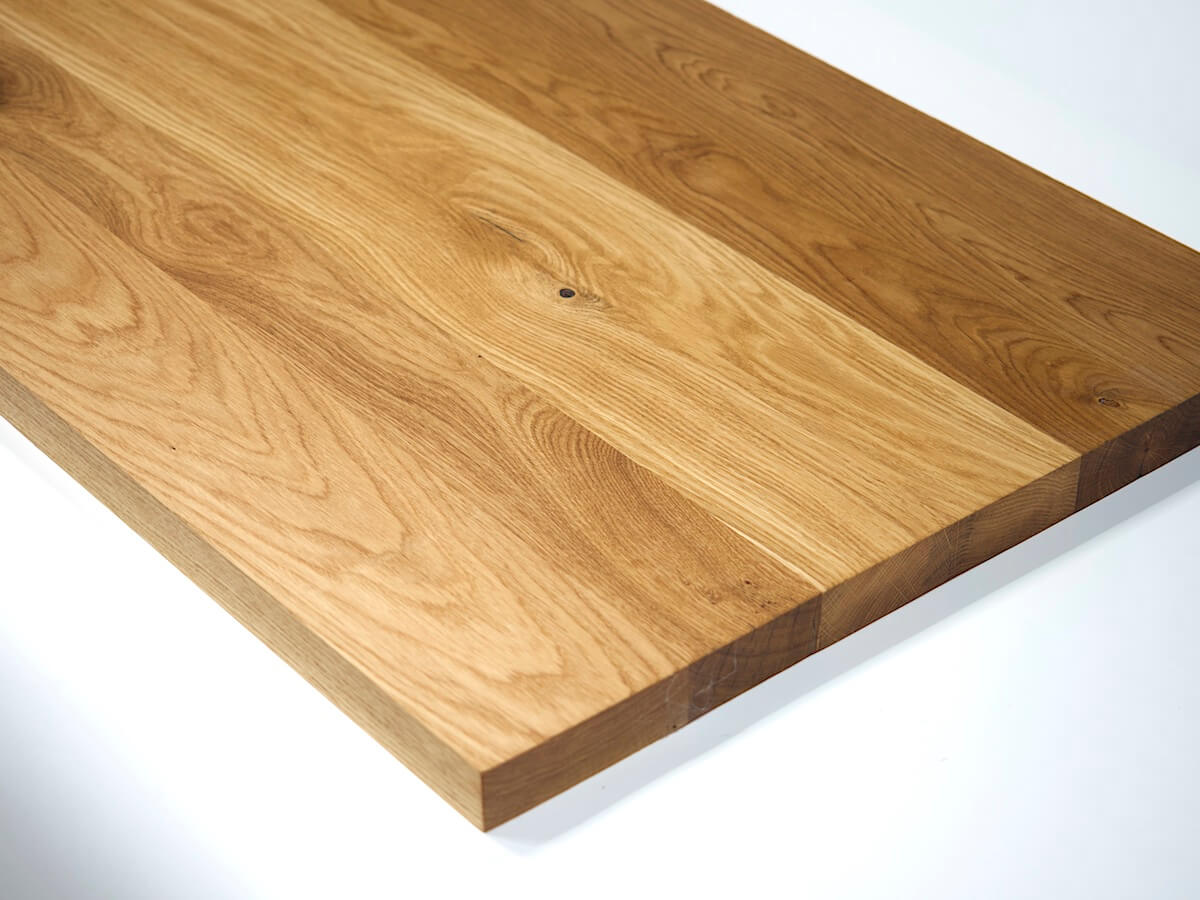
Planed oak beams are machined smooth on all sides, creating a cleaner starting point for customers who want to prepare and finish the beam themselves.
Unlike fully finished beams, these are supplied as more of a DIY or trade-ready option. They still require sanding, waxing or oiling before installation and may continue to feature natural cracks, splits, knots and character within the timber. The surface is smoother than a rustic or heavily aged beam, but the oak still retains its natural variation.
They are often chosen by customers who:
- Want to apply their own finish or colour
- Prefer to shape or customise the beam themselves
- Are working on renovation or trade projects
- Need a more cost-effective oak beam option
Because they are not fully shaped or pre-finished, planed beams are typically more affordable than our fully finished styles. They are also supplied without pre-drilled holes or fixings.
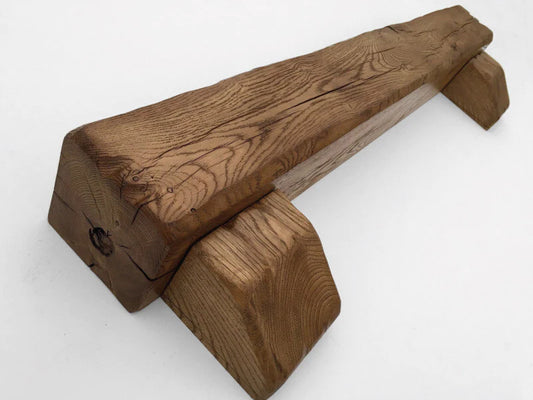
Aged and Rustic Beams
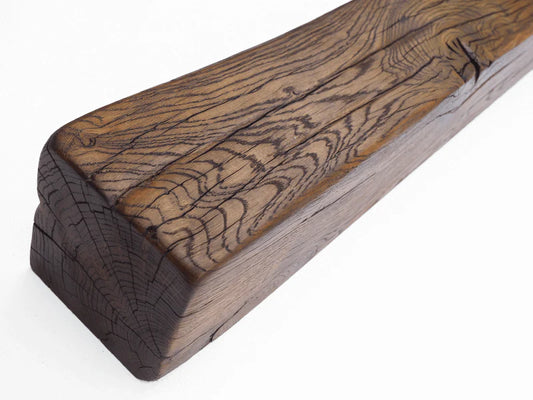
These beams are worked to introduce texture and detail, giving the appearance of older, time-worn timber.
Common characteristics include:
- Softened or distressed edges
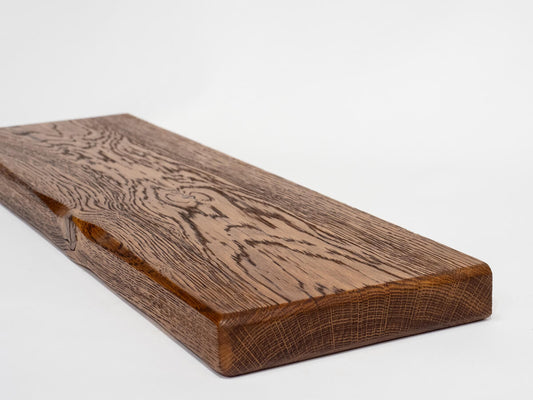
- Deeper grain definition
- More variation in tone
They are particularly effective in:
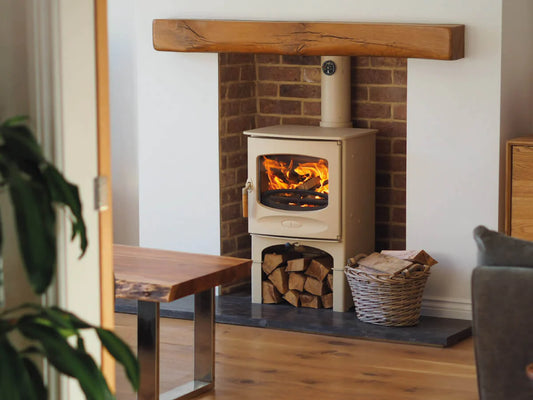
- Barn conversions
- Cottage-style interiors
- Spaces with exposed brick or stone
Used well, they can make a room feel more established and add depth that newer materials often lack.
Hollow Box Beams
Where weight or installation is a concern, hollow box beams offer a practical alternative.
They are designed to:
- Replicate the look of solid oak
- Be significantly lighter
- Allow easier installation, particularly on ceilings
They are often used:
- To cover structural elements
- In retrofit projects
- Where solid beams would be too heavy
They won’t provide the same physical presence as solid oak, but visually they can achieve a very similar result when finished well.
Oak Beams: Getting the Size Right

Sizing is one of the most common areas where things go wrong, and it’s usually because the beam has been chosen without considering the full space.
A beam doesn’t just sit on its own, it interacts with:
- Ceiling height
- Wall width
- Other features in the room
A Practical Way to Approach Sizing
Instead of thinking in exact measurements straight away, it helps to think in terms of visual weight.
Smaller rooms - Slimmer beams tend to work better, helping avoid the space feeling heavy or crowded
Medium-sized rooms - A balanced beam with moderate depth will usually feel in proportion
Large or open-plan spaces - Deeper, more substantial beams are often needed to hold their presence across the room
Common Mistakes to Avoid
- Choosing a beam that is too shallow for a large space
- Over-sizing beams in smaller rooms
- Not considering how multiple beams will look together
- Forgetting to account for ceiling height
Quick Sizing Checklist
Before choosing your beam, it’s worth asking:
- Does the beam feel in proportion to the room?
- Will it be viewed from multiple angles?
- Is it a feature, or part of a wider design?
- Will it sit alongside other elements like oak fireplace beams or oak shelves?
Getting this right early on makes a big difference to the final result. Browse our oak beams to see how different sizes and profiles work across real spaces.
Choosing the Right Oak Beam Finish

Once you’ve settled on the type and size of your beam, the finish becomes the detail that pulls everything together. It affects not just the colour, but how the beam sits within the wider space.
Lighter finishes tend to feel more subtle and are often used in modern interiors where you don’t want the beam to dominate. They work particularly well alongside neutral walls and softer materials, helping maintain a sense of openness.
Darker finishes introduce more contrast and visual weight. In rooms with exposed brick, stone or more traditional features, these tones often feel more natural, picking up on the depth and variation in the surrounding materials.
At Traditional Beams, our finishes are designed to enhance the natural grain of the oak while providing long-lasting protection:
- White
- Light Oak
- Antique Pine
- Medium Oak
- Rugger Brown
- Walnut
- Black
Rather than choosing a finish in isolation, it’s worth considering how it will work alongside other elements in the room. Matching tones across features such as oak fireplace beams, oak shelving or window beams can make the space feel far more cohesive without everything needing to be identical.
Where Oak Beams Work Best
Oak beams are incredibly versatile, but they tend to have the most impact when they’re used with a clear purpose.
Ceiling features
Ideal for breaking up large flat surfaces and adding structure, particularly in open-plan spaces where definition is often lacking.
Fireplace features
Beams naturally draw attention to the centre of the room. When paired with oak fireplace beams or surrounds, they help anchor the space and create a more defined focal point.
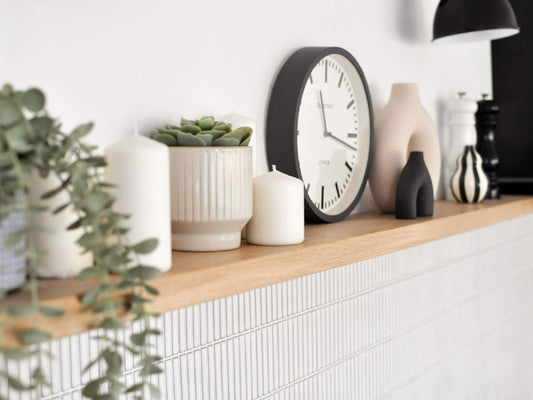
Shelving and alcoves
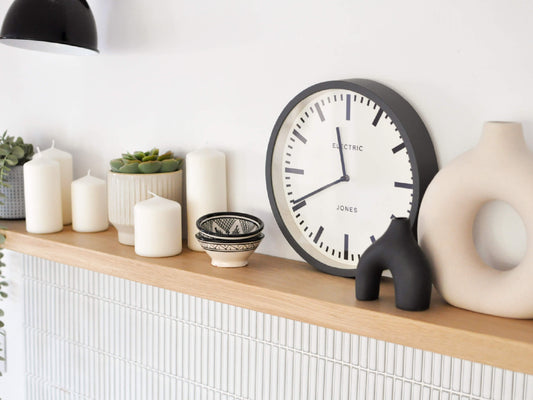
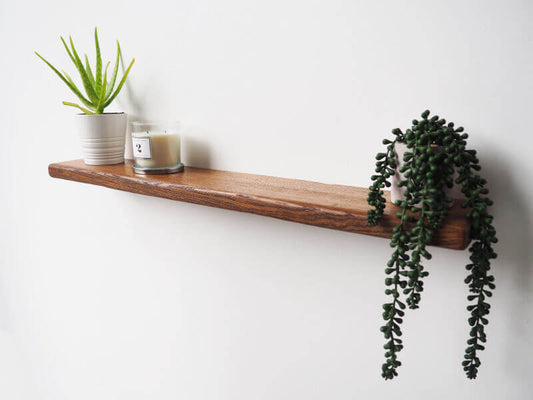
Beams can be used as standalone shelves or alongside oak shelves to create practical storage that still feels in keeping with the overall design.
Doors and windows
Adding oak window beams above openings introduces subtle architectural detail and helps frame the space, which is particularly useful in newer homes.
Used thoughtfully, each of these applications adds something slightly different, whether that’s structure, function or visual balance.
Oak Beams: Creating a Cohesive Look

One of the biggest differences between a space that feels finished and one that doesn’t often comes down to consistency.
Oak beams tend to work best when they form part of a wider approach rather than being used as a standalone feature. That doesn’t mean everything needs to match exactly, but there should be a clear relationship between the different elements in the room.
Simple Ways to Create a Cohesive Finish
- Use the same or similar finishes across beams, shelving and fireplace features
- Repeat oak in more than one area of the room to create continuity
- Balance larger beams with smaller supporting elements such as shelves
- Avoid introducing too many competing tones or textures
In more developed schemes, beams might appear across ceilings, fireplaces and openings, all working together to create a consistent material palette. When handled carefully, this can give the space a much stronger sense of structure without it feeling overdesigned.
It’s often these small decisions, rather than one standout feature, that make the biggest difference to how a room comes together.
Solid Oak Beams vs Hollow Box Beams

One of the most common questions when choosing oak beams is whether to go for solid timber or a hollow alternative. Both options have their place, and the right choice usually comes down to how the beam will be used within the space.
|
Feature |
Solid Oak Beams |
Hollow Box Beams |
|
Construction |
Single piece of solid timber |
Hollow structure, made from joined sections |
|
Weight |
Heavier, more substantial |
Lightweight and easier to handle |
|
Installation |
More involved |
Typically quicker and more flexible |
|
Appearance |
Natural depth and character |
Designed to replicate solid oak |
|
Best Used in Projects |
Feature elements and focal points |
Ceilings, RSJ covers and retrofit projects |
When Solid Oak Beams Make More Sense
Solid beams are usually the preferred option when the beam is a key feature in the room.
They tend to work best:
- Above fireplaces as a focal point
- In exposed ceiling designs
- In traditional or period-style interiors
Their weight and natural variation give them a presence that is difficult to replicate, particularly in spaces where the beam is intended to stand out.
When Hollow Box Beams Are the Better Option
Hollow beams are often chosen for practical reasons, they are particularly useful:
- On ceilings where weight is a concern
- When covering structural elements
- In retrofit projects where installation needs to be simpler
While they don’t carry the same physical weight as solid oak, visually they can achieve a very similar result when finished well, especially when used as part of a wider design.
Compare both options in more detail across our oak beams and hollow box beams ranges.
Oak Beams: What to Consider Before You Buy

By this stage, you should have a good idea of the type, size and finish you’re looking for. Before making a final decision, it’s worth taking a step back and checking how everything fits together.
Quick Checklist
- Have you chosen the right beam type for how it will be used?
- Does the size feel in proportion to the room and ceiling height?
- Will the finish work alongside other materials in the space?
- Are you planning to pair it with features such as oak fireplace beams, shelving or window details?
- Is installation straightforward for your setup?
Taking a few minutes to run through these points can help avoid small issues that often only become noticeable once the beam is in place.
Choosing oak beams is as much about how they fit into the space as it is about the beam itself. When the size, finish and placement all work together, the result feels natural and well balanced. The beam becomes part of the room rather than something added afterwards, which is usually what gives it that lasting impact.
Whether you’re introducing a single feature or planning a wider scheme, getting these details right early on will make the whole process smoother and the end result far more considered.
Still Deciding? We Can Help
If you’re unsure which beam will work best, we’re happy to help you narrow things down. You can also browse our full collection of oak beams to compare sizes, styles and finishes before making a decision.

Oak Beam: Common Buying FAQs
What’s the most common mistake when choosing oak beams?
One of the most common issues is choosing a beam that doesn’t suit the scale of the room. Beams that are too small can feel lost, while oversized beams can dominate the space. Taking time to consider proportions usually leads to a much better result.
Should oak beams match other wood in the room?
They don’t need to match exactly, but there should be some consistency in tone. Keeping finishes within a similar range helps the space feel more cohesive without looking overly coordinated.
Is it better to use one feature beam or multiple beams?
This depends on the space. A single beam can work well as a focal point, particularly above a fireplace, while multiple beams are often used to add structure across ceilings or larger rooms.
How far apart should ceiling beams be spaced?
Spacing will vary depending on the size of the room and the beam dimensions, but consistent spacing is key. Uneven placement is one of the easiest ways for beams to feel out of place.
Can I mix rustic and smooth oak beams in the same space?
It can work, but it needs to be done carefully. Keeping the finish consistent or using one style as the dominant feature usually helps avoid the space feeling disjointed.
When should I choose hollow beams instead of solid oak?
Hollow beams are often the better option where weight, installation or existing structures are a concern. They’re particularly useful for ceilings or retrofit projects where solid timber may not be practical.