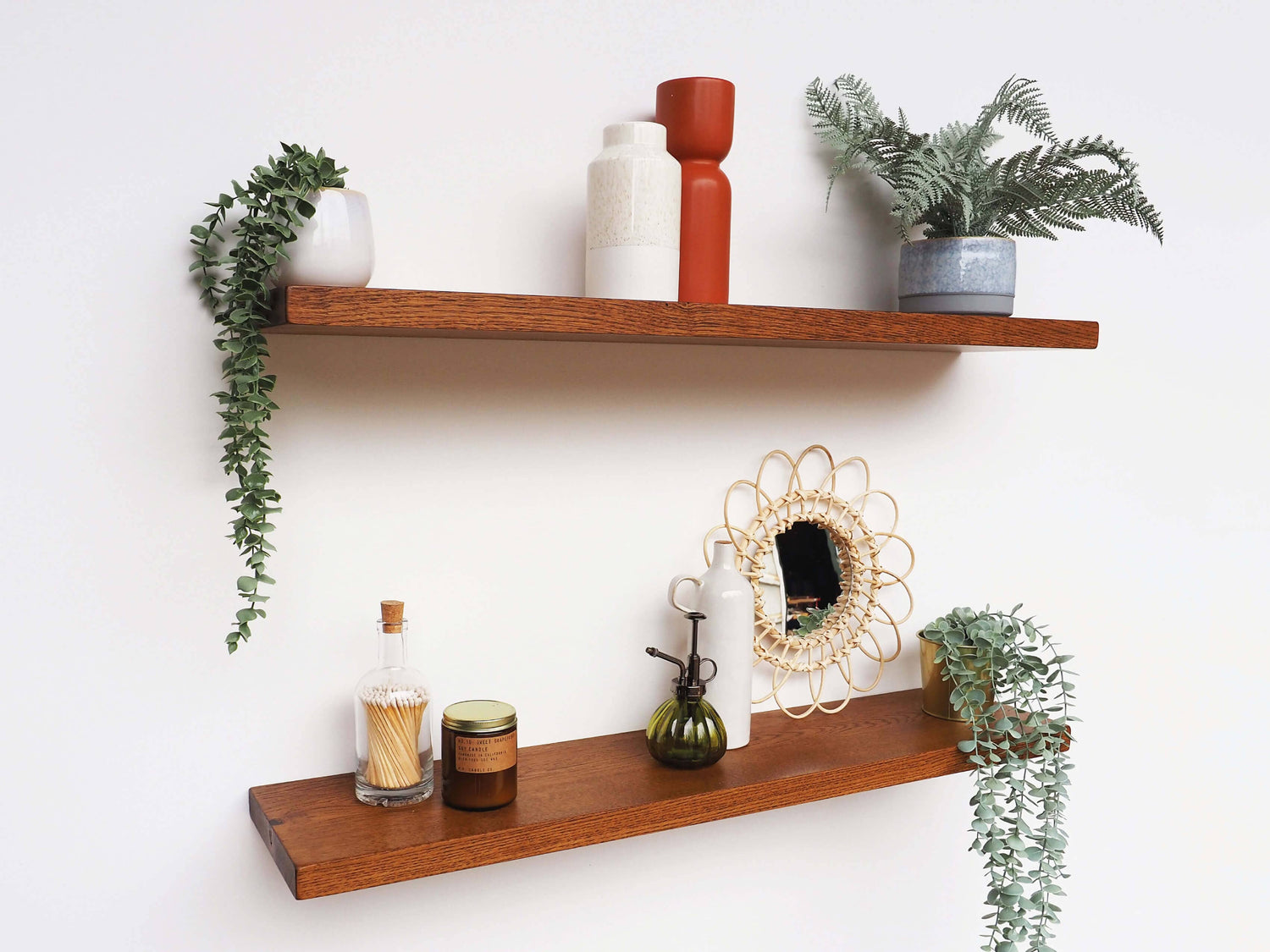

How Much Weight Can Floating Shelves Hold?
One of the biggest misconceptions around floating shelves is that they’re only suitable for lightweight styling pieces or decorative use. In reality, properly installed floating shelves can comfortably support everyday storage, books, kitchenware and much heavier items than most people expect. The issue is that not all floating shelves are built the same, and the actual weight capacity depends on far more than just the shelf itself.
Wall type, fixing quality, shelf depth, timber construction and how weight is distributed across the shelf all play a part in how strong the finished installation will be.
At Traditional Beams, one of the most common questions we get asked is whether floating shelves are genuinely strong enough for practical everyday use. The short answer is yes, but only when the shelf and support system are suited properly to the space.
In this guide, we’ll break down what actually determines floating shelf strength, how much weight different shelves can realistically support and the most common mistakes that cause floating shelves to fail over time.
In This Guide
- What actually determines floating shelf strength
- How much weight floating shelves can typically hold
- Why wall type matters so much
- Are floating shelves strong enough for books and kitchens?
- Floating shelves on plasterboard walls explained
- Why shelf depth affects load capacity
- Solid wood vs hollow floating shelves
- Common reasons floating shelves fail
- How to make floating shelves stronger
- Choosing the right floating shelves for long-term use
What Actually Determines Floating Shelf Strength?

People often focus entirely on the shelf itself, but the wall and fixing system are usually just as important.
A solid oak floating shelf installed correctly into masonry with heavy-duty concealed supports will perform very differently from a lightweight hollow shelf fixed poorly into plasterboard.
The main factors that affect floating shelf strength are:
|
Factor |
Why It Matters |
|
Wall Type |
Solid walls naturally provide stronger fixing points |
|
Support System |
Concealed brackets vary hugely in strength and quality |
|
Shelf Material |
Solid timber performs differently to hollow shelving |
|
Shelf Depth |
Deeper shelves place more leverage on the wall |
|
Weight Distribution |
Evenly spread loads create less stress on supports |
|
Installation Quality |
Poor alignment or weak fixings reduce stability |
This is why two shelves that look visually similar can end up performing completely differently once installed.
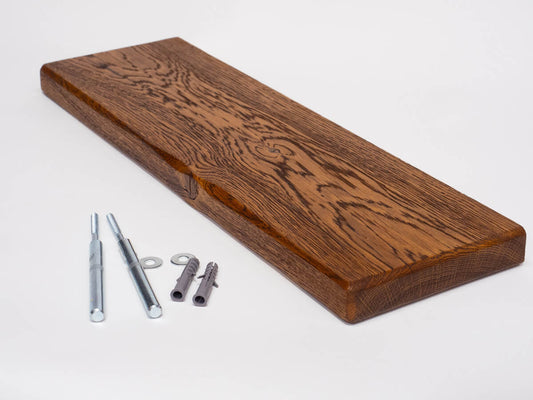
At Traditional Beams, our oak floating shelves use concealed heavy-duty support systems paired with solid timber construction to create a much stronger and more substantial finished shelf compared to lightweight hollow alternatives.
Floating Shelf Weight Limits Explained
There isn’t a single universal weight limit for floating shelves because every installation is different.
As a general rule, floating shelves installed onto solid masonry walls with suitable concealed supports can comfortably hold everyday decorative and practical items without issue.
The table below gives a rough idea of how wall type and intended use affect floating shelf performance.
|
Wall Type |
Typical Floating Shelf Use |
Support Potential |
|
Solid Masonry |
Books, Cookware, Decorative Styling |
Excellent |
|
Stud Walls |
Everyday Storage Depending On Stud Position |
Very Good |
|
Plasterboard |
Lighter Storage With Specialist Fixings |
Moderate To Very Good |
|
Unsupported Plasterboard |
Decorative Use Only |
Limited |
The shelf itself also matters. Solid timber shelves naturally feel more substantial because they carry real weight and density themselves, while thinner hollow shelves may flex more easily under heavier loads.
In most homes, properly installed floating shelves are more than capable of supporting:
- Books
- Kitchenware
- Plants
- Decorative Styling
- Everyday Storage
- Bathroom Accessories
The key is making sure the support system matches both the wall type and intended use.
Are Floating Shelves Strong Enough for Books?

Yes, provided the shelf has been installed correctly and the supports are appropriate for the load. Books are actually one of the more demanding shelf loads because the weight is:
- Consistent
- Concentrated
- Long-Term
Unlike decorative accessories that may weigh very little overall, books place continuous pressure across the full length of the shelf.
This is where:
- Shelf Depth
- Timber Thickness
- Concealed Support Quality
- Wall Structure
All become especially important.
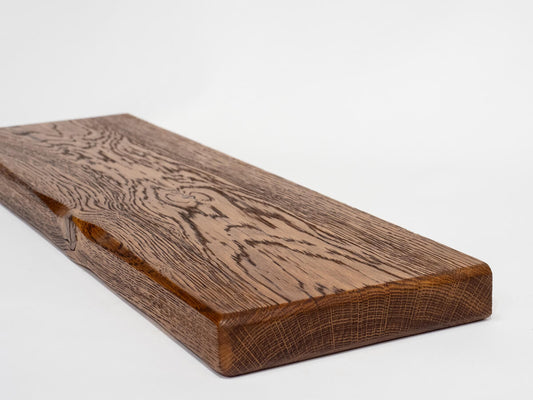
Chunkier solid timber floating shelves generally perform much better here because they resist flexing more effectively over time. Many customers choose our oak floating shelves specifically for alcove shelving and book storage because the heavier solid oak construction creates a much sturdier and more substantial feel once installed.
Why Wall Type Matters So Much

Wall type is often the deciding factor in how strong floating shelves can realistically be. Solid masonry walls provide the strongest fixing base because the concealed supports can anchor directly into brick or stone.
Plasterboard walls require more planning, but modern fixing systems have made floating shelving on plasterboard far more reliable than many people expect. The biggest mistake is assuming all plasterboard installations are automatically weak.
In reality, specialist support systems can create very strong floating shelf installations when used correctly. Our dedicated shelves for plasterboard walls collection uses concealed Hafele supports and Gripit fixings designed specifically for lighter wall types while still maintaining the cleaner floating appearance customers want.
That said, unsupported plasterboard will always have limitations, particularly for:
- Longer Shelves
- Very Deep Shelves
- Heavy Kitchen Storage
- Large Book Collections
This is why understanding the wall structure before choosing shelving is always worth doing properly.
Why Shelf Depth Affects Weight Capacity
Shelf depth changes more than just the appearance of floating shelving. It also changes the amount of pressure being placed onto the wall itself. The deeper the shelf becomes, the greater the leverage pulling against the concealed supports.
That doesn’t automatically mean deeper floating shelves are a bad idea, but it does mean the support system and wall structure become more important as shelf depth increases.
As a rough guide:
|
Shelf Depth |
Typical Use |
Load Pressure |
|
15cm–20cm |
Decorative Styling & Lighter Storage |
Lower |
|
20cm–25cm |
Everyday General Use |
Moderate |
|
25cm–30cm |
Heavier Storage & Kitchens |
Higher |
A shallow floating shelf holding framed prints creates very little strain compared to a deep kitchen shelf loaded with cookware or stacked ceramics. This is one of the reasons floating shelves sometimes fail over time. The shelf itself may appear strong enough initially, but the fixing system may not be designed for the long-term leverage created by deeper shelving and heavier loads.
At Traditional Beams, shelf depth is always considered alongside:
- Timber Thickness
- Concealed Support Type
- Intended Use
- Wall Structure
Rather than treated as purely a styling decision.
Solid Wood vs Hollow Floating Shelves

This is another area where floating shelves can vary massively in quality. Many cheaper floating shelves are hollow internally with a thin outer veneer designed to imitate solid timber. While these can work for lightweight decorative use, they generally don’t provide the same strength, durability or long-term stability as solid wood shelving. Solid timber floating shelves feel noticeably different once installed as the shelf carries real density and weight itself, which helps create:
- Better Rigidity
- Reduced Flex
- Greater Long-Term Stability
- A More Substantial Overall Feel
This becomes especially important for:
- Book Storage
- Kitchens
- Longer Shelf Lengths
- Everyday Heavy Use
Our oak floating shelves and pine floating shelves are handcrafted from solid timber rather than hollow veneered construction, which creates a much more durable and substantial finished shelf.
Real wood will naturally continue to settle and develop character over time, but properly prepared solid timber shelving generally ages far better than lightweight manufactured alternatives.
Common Reasons Floating Shelves Fail

Most floating shelf problems come back to installation rather than the shelf style itself.
A properly installed floating shelf with suitable supports can comfortably last for years, but a poor fixing setup will usually show problems surprisingly quickly.
The most common causes of failure include:
|
Problem |
What Usually Causes It |
|
Shelf Sagging |
Weak Supports Or Excessive Shelf Depth |
|
Pulling Away From Wall |
Poor Fixings Or Weak Wall Structure |
|
Shelf Movement |
Uneven Bracket Installation |
|
Cracking Or Flexing |
Hollow Shelf Construction |
|
Long-Term Instability |
Excessive Weight Over Time |
One issue people often overlook is uneven weight distribution. For example, stacking all heavy items onto one side of the shelf creates much more strain than distributing weight evenly across the full length. Choosing the right shelf for the intended use from the start usually prevents most long-term problems entirely.
How to Make Floating Shelves Stronger
The strongest floating shelves are usually the result of good planning rather than simply using thicker timber. A few small decisions make a huge difference to long-term performance.
Prioritise the wall structure
Solid masonry walls naturally provide the strongest fixing points for floating shelves. If installing onto plasterboard, using specialist supports or fixing into timber studs where possible will improve stability significantly.
Match the shelf depth to the intended use
Deeper shelves create more leverage against the wall, particularly when carrying heavier loads. For decorative styling, slimmer floating shelves often perform perfectly well while also reducing visual bulk within the room.
Avoid lightweight hollow shelves for heavy storage
Solid timber shelving generally performs much better for heavier items because the shelf itself resists movement and flexing more effectively over time.
Distribute weight evenly
Even strong floating shelves can struggle if all heavy items are concentrated in one area. Spreading weight more evenly across the shelf reduces stress on the concealed supports and helps improve long-term stability.
Why Customers Choose Traditional Beams Floating Shelves

At Traditional Beams, our floating shelves are designed to feel genuinely substantial once installed. Rather than lightweight hollow shelving, we use solid oak, pine and Scandinavian redwood paired with concealed heavy-duty support systems selected for long-term everyday use.
Customers often choose our shelving because they want:
- Stronger Solid Timber Construction
- A More Premium Finished Appearance
- Made To Measure Sizing
- Reliable Everyday Performance
- Shelving That Feels Balanced Within The Room
Many customers also pair shelving with our oak beams, oak fireplace beams, fireplace surrounds and oak window beams to create a more cohesive timber finish throughout the home. Because every shelf is handcrafted in our North Yorkshire workshop, we can also help advise on sizing, wall suitability and the best shelving setup for different spaces and wall types.

Floating Shelves: FAQs
How Much Weight Can Floating Shelves Hold?
This depends on wall type, shelf depth, fixing quality and installation. Properly installed floating shelves on solid walls can comfortably support everyday storage and decorative use.
Are Floating Shelves Strong Enough for Books?
Yes. Solid timber floating shelves with suitable concealed supports are commonly used for books, particularly within alcoves and living spaces.
Can Floating Shelves Hold Heavy Kitchen Items?
They can when installed correctly onto suitable walls using appropriate support systems. Shelf depth and weight distribution become especially important in kitchens.
Do Floating Shelves Work on Plasterboard Walls?
Yes, although specialist fixings and concealed support systems are usually recommended depending on the intended load and shelf size.
Are Solid Wood Floating Shelves Better Than Hollow Shelves?
For heavier or long-term use, solid timber floating shelves generally provide better rigidity, durability and overall stability than hollow alternatives.
Why Do Floating Shelves Sag Over Time?
Sagging is usually caused by poor support systems, excessive shelf depth, hollow shelf construction or placing too much weight onto the shelf over time.