
How to Fix Shelves to Different Wall Types
Installing shelves sounds straightforward until you actually start looking at the wall you’re fixing into. A shelf that feels perfectly solid on a brick wall may struggle on unsupported plasterboard, while the same fixing method that works well for lightweight decorative shelving might not be suitable for books, kitchenware or heavier solid timber shelves.
One of the biggest mistakes people make is focusing entirely on the shelf itself without properly considering the wall behind it. In reality, shelves are only ever as strong as the wall and fixing system supporting them.
At Traditional Beams, we regularly speak to customers who are unsure whether their walls are suitable for floating shelves, worried about plasterboard installations or trying to work out which shelf style will feel most secure long term. The good news is that most wall types can support shelving successfully when the right fixings, support systems and installation methods are used.
In this guide, we’ll explain how different wall types affect shelving installation, which shelf styles work best on different surfaces and the most common mistakes that cause shelves to loosen or fail over time.
- Why wall type matters when installing shelves
- Fixing shelves to brick and masonry walls
- Installing shelves on plasterboard walls
- Shelves on stud walls explained
- Floating shelves vs bracket shelves on different wall types
- Common shelf installation mistakes
- How to make shelves more secure
- Choosing the right shelves for your wall type
Why Wall Type Matters

Not all walls behave the same once weight is added to them. A solid brick wall naturally provides a much stronger fixing point than unsupported plasterboard, which means the installation method, support system and shelf choice all need to match the wall structure properly.
This becomes especially important with:
- Floating Shelves
- Longer Shelf Lengths
- Deep Shelves
- Heavy Storage
- Solid Timber Shelving
The wall type affects:
- How much weight the shelf can realistically support
- Which fixings should be used
- Whether concealed supports are suitable
- Long-term shelf stability
- How secure the shelf feels once installed
This is why two identical shelves can perform completely differently depending on where they’re installed. Before choosing shelving, it’s always worth identifying whether you’re fixing into:
- Solid Masonry
- Plasterboard
- Stud Walls
- Mixed Wall Construction
Because the installation approach may change significantly depending on the surface behind the plaster.
Fixing Shelves to Brick and Masonry Walls

Solid masonry walls are generally the easiest and strongest surface for shelving installation. Brick, stone and solid block walls provide excellent support because fixings can anchor directly into the structure of the wall itself rather than relying purely on plasterboard strength.
This makes masonry walls particularly well suited to:
- Floating Shelves
- Heavy Oak Shelving
- Kitchen Shelving
- Long Shelf Spans
- Book Storage
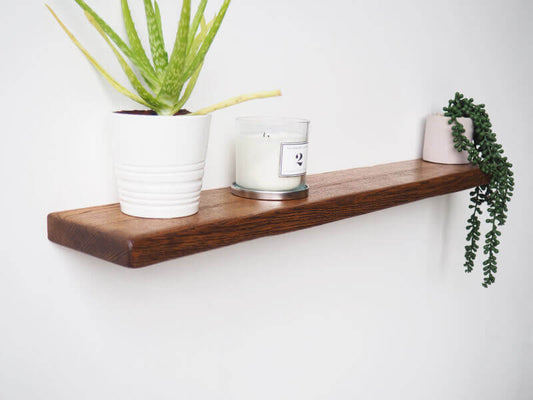
Floating shelves often perform especially well on solid walls because concealed supports can be fixed securely into masonry while remaining completely hidden once installed.
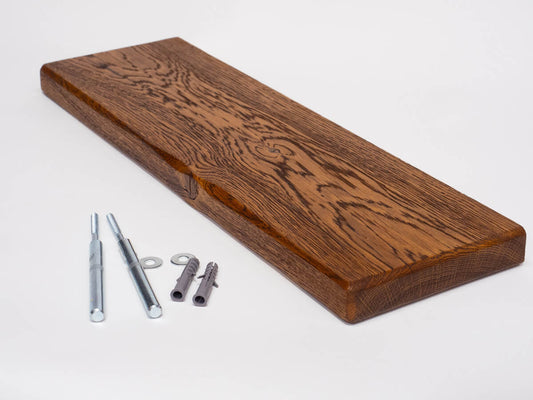
Our oak floating shelves are commonly installed onto masonry walls using heavy-duty concealed supports designed to create a clean floating appearance while maintaining strong everyday support.
One thing that’s important with masonry walls is drilling accurately. Uneven drilling or poorly aligned concealed supports can become much more noticeable once the shelf is fitted, particularly with floating shelving where the brackets are hidden from view.
In most cases, solid walls provide the highest long-term load capacity and the strongest overall shelf installation.
Installing Shelves on Plasterboard Walls

Plasterboard is the wall type that makes most people nervous when installing shelves.
A lot of customers assume floating shelves simply won’t work on plasterboard, but that isn’t actually true. Modern fixing systems and concealed supports have made plasterboard shelving far more reliable than many people expect, provided the installation is planned properly.
The important thing is understanding the limitations of the wall and choosing the right support system for the intended load.
The biggest mistake with plasterboard shelving
Most plasterboard shelf problems happen because standard fixings are used for shelves that are simply too heavy. Lightweight decorative shelves may hold initially, but over time the wall can begin to weaken if:
- The load is too heavy
- The shelf is too deep
- Weight isn’t distributed evenly
- The fixing system isn’t designed for plasterboard
This becomes even more important with solid timber shelving because real wood naturally carries more weight than lightweight hollow alternatives.
Specialist plasterboard fixings make a huge difference
Modern plasterboard support systems are significantly stronger than basic wall plugs or standard screws. Our dedicated shelves for plasterboard walls collection uses concealed Hafele supports paired with Gripit fixings designed specifically for lighter wall types.
These systems work by spreading the load more effectively behind the plasterboard rather than concentrating pressure into one small fixing point. When installed correctly, this creates a much more secure floating shelf installation suitable for everyday practical use.
That said, plasterboard will always have some limitations compared to solid masonry walls, particularly for:
- Very Long Shelves
- Deep Kitchen Shelving
- Large Book Collections
- Extremely Heavy Storage
Understanding those limits early on usually prevents most long-term installation issues.
Installing Shelves on Stud Walls

Stud walls can actually provide very strong shelf support when the fixings align correctly with the timber studs behind the plasterboard. The challenge is locating the studs accurately before installation.
Fixing directly into timber studs usually creates a much stronger installation compared to relying purely on plasterboard fixings alone, which is why many people prefer this approach for:
- Heavy Floating Shelves
- Book Storage
- Kitchens
- Longer Shelf Lengths
One thing worth remembering is that stud spacing may affect shelf placement slightly. Occasionally the ideal shelf position and the stud positions don’t line up perfectly, which may require:
- Additional Supports
- Slight Position Adjustments
- Different Bracket Spacing
- Alternative Shelf Lengths
This is one reason bracket shelving can sometimes feel slightly easier to adapt on stud walls compared to floating shelves, particularly for larger installations.
Floating Shelves vs Bracket Shelves on Different Walls

Different shelf styles naturally suit different wall structures better. Floating shelves rely much more heavily on concealed support precision, while bracket shelves spread the load more visibly beneath the shelf itself.
As a general guide:
|
Wall Type |
Floating Shelves |
Bracket Shelves |
|
Solid Masonry |
Excellent |
Excellent |
|
Stud Walls |
Very Good |
Very Good |
|
Plasterboard With Specialist Fixings |
Good |
Good To Very Good |
|
Weak Or Unsupported Plasterboard |
Limited |
Usually Better |
This doesn’t necessarily mean bracket shelves are stronger overall, but visible brackets can sometimes create a more forgiving installation on lighter wall types because the load is distributed more openly beneath the shelf.
Our oak shelves with brackets are often chosen for utility rooms, kitchens and heavier storage areas where customers want shelving to feel especially solid and grounded visually.
Floating shelves, on the other hand, are usually preferred where the goal is:
- Cleaner Lines
- Reduced Visual Clutter
- Contemporary Styling
- A More Minimal Appearance
Both styles can perform extremely well when matched correctly to the wall structure and intended use.
Common Shelf Installation Mistakes

Most shelving problems don’t come from the shelf itself. They usually come from installation shortcuts or using the wrong support system for the wall.
The most common mistakes include:
|
Mistake |
What It Causes |
|
Using Standard Wall Plugs On Plasterboard |
Weak Support & Pull-Out Risk |
|
Overloading Deep Shelves |
Long-Term Sagging |
|
Poor Bracket Alignment |
Shelf Movement & Uneven Installation |
|
Ignoring Wall Structure |
Reduced Stability |
|
Using Hollow Shelves For Heavy Storage |
Flexing & Weakness Over Time |
Another issue people often overlook is uneven weight distribution. For example, placing all heavy items at one end of the shelf creates significantly more strain than spreading the weight evenly across the full span.
This becomes particularly important for:
- Books
- Kitchenware
- Plants
- Larger Decorative Items
Proper planning before installation usually prevents most of these problems entirely.
How to Make Shelves More Secure
A few small installation decisions can make a huge difference to long-term shelf stability.
Match the fixing system to the wall type
This is the single most important factor. Brick walls, plasterboard and stud walls all require different approaches, and using the wrong fixing system is one of the main reasons shelves loosen over time.
Don’t overload deep shelves
The deeper the shelf becomes, the more leverage it places against the wall.
This is especially important for floating shelves carrying books, cookware and heavy decorative pieces. Deeper shelves usually require stronger supports and more careful weight distribution.
Use solid timber shelving for heavier loads
Solid wood shelving generally performs much better long term compared to lightweight hollow shelving, particularly for everyday practical use. Our oak floating shelves and pine floating shelves are handcrafted from solid timber specifically to create a more substantial and stable finished shelf.
Spread weight evenly
Even strong shelving systems can struggle if all heavy items are concentrated in one small area. Distributing weight evenly helps reduce strain on the supports and improves long-term stability significantly.
Choosing the Right Shelves for Your Wall Type

The best shelf installation usually starts with understanding the wall first rather than choosing the shelf first.
Solid masonry walls give you the most flexibility because they comfortably support both floating shelves and bracket shelving with very strong fixing potential.
Plasterboard and stud walls require slightly more planning, but modern support systems mean both floating and bracket shelving can still work extremely well when installed correctly.
At Traditional Beams, we handcraft shelving in solid oak, pine and Scandinavian redwood using support systems selected specifically for long-term everyday use across different wall types.
Customers often choose:
Oak floating shelves for cleaner contemporary spaces
Pine floating shelves for lighter interiors
Oak shelves with brackets for stronger architectural character
Rustic shelves with brackets for more traditional and industrial spaces
Shelves for plasterboard walls for lighter wall structures requiring specialist support systems

Shelf Installation: FAQs
Can Floating Shelves Be Installed On Plasterboard Walls?
Yes. Specialist concealed supports and plasterboard fixings can create very strong floating shelf installations when used correctly.
Are Shelves Stronger On Brick Walls?
Generally yes. Solid masonry walls provide stronger fixing points and higher long-term load potential compared to unsupported plasterboard.
Do Floating Shelves Need Stud Walls?
Not always. Floating shelves can often be installed successfully on masonry and plasterboard walls using suitable support systems and fixings.
What Fixings Should I Use For Shelves?
This depends entirely on the wall type, shelf depth and intended load. Masonry, plasterboard and stud walls all require different fixing approaches.
Are Bracket Shelves Better For Heavy Storage?
They can sometimes feel more secure visually because the supports remain visible beneath the shelf, particularly for deeper shelving and heavier everyday use.
Why Do Shelves Pull Away From The Wall?
This is usually caused by weak fixings, poor wall support, overloaded shelving or installation systems not suited properly to the wall type.